


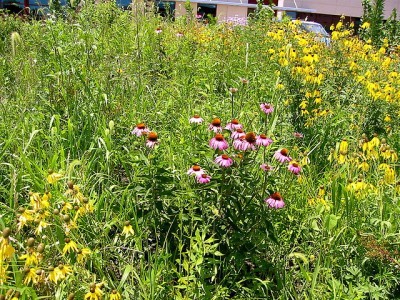
A prairie garden replaces high-maintenance lawn with a dynamic, wildlife-friendly meadow of native grasses and wildflowers. Once established, it requires minimal care—just annual mowing—and grows more vibrant each year.
Develop a plan selecting wildlife-beneficial, non-invasive species. Remove existing vegetation (sod) by digging or solarizing (black plastic for 2 months). Match plants to your soil type—some prefer dry gravel, others rich loam. Native species are best: they need less care and support local ecology.
Mix grasses with flowers for contrast, cover, and naturalistic appeal.
Seeding: Most economical. Sow after frost; spring rains aid germination. Keep moist; mulch lightly to protect from birds/wind. Full establishment takes 1–2 years. Intersperse potted plants for faster results.
Ongoing care: Moderate watering once established. Create fire buffers (soil/sod strips) near structures in fire-prone areas. Remove seed heads from potentially invasive species; leave others for wildlife and self-sowing. Mow annually in late fall, leaving cuttings as mulch. The meadow returns thicker and more vibrant each spring.
Designing Your Vegetable Garden Layout: Software, Rows, and Raised Beds
5 Essential Steps to Design Your Dream Landscape
Creating a Beautiful Dish Garden: Design Tips and Plant Selection
Buddhist Garden Design: Cultivating Peace Through Landscape
Garden Design Tips: Color, Structure, and Style for Beautiful Landscapes
Garden Features for Improved Design: Define What You Want Before You Build
Moon Garden Design: Enchanting Nighttime Beauty for All Seasons
Gardening Fundamentals: Watering, Pest Control, Soil, and Weed Prevention
Urban Gardening: 4 Strategies for City Spaces
5 Pro Vegetable Gardening Tips for Better Harvests with Less Work
Designing a Butterfly Garden: Nectar, Sun, and Sanctuary
Home Garden Plant Selection: Matching Plants to Your Place and Purpose
Garden Design Essentials: Site Analysis, Layout & Plant Selection
Copyright © www.100flowers.win Botanic Garden All Rights Reserved