


Standard nursery pots doom woody plants to circling roots that never self-correct after planting, leading to slow decline. Root-pruning (air-pruning) containers solve this by stopping root tips at the pot wall, forcing branching and eliminating circles.
In smooth-walled pots, roots follow the perimeter endlessly. Most root mass ends up near the hot pot wall, wasting media and risking heat damage. Herbaceous plants tolerate this; trees and shrubs don't.
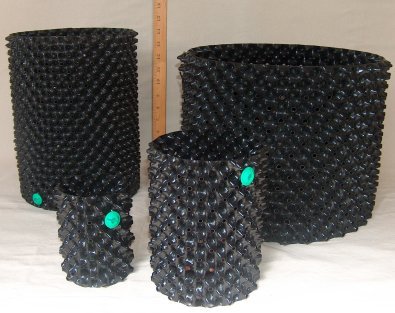
Designs include plastic pots with holes/channels and fabric grow bags that strangulate root tips. The author favors Superoots Air-Pots—reusable, effective, with informative videos at Superoots.com. Fabric bags can trap aggressive roots, requiring bag cutting at planting.
A plant's final pot may be air-pruning, but earlier liners may have been standard pots, leaving hidden circling roots. The gold standard: grown in air-pruning containers from seedling/cutting stage. Few nurseries do this.
Home propagators can start their own trees/shrubs in air-pruning pots (retail sources: Tree Amigos in western U.S., Aroidia Research in eastern U.S.), producing superior plants with the best possible start.
Photo credits: Linda Dodge (UC Davis), LariAnn Garner (Aroidia Research).
Root Growth Stimulants: Superthrive and Hormones
Brown Patches on Orchid Roots: Natural Corking
Nephthytis (Arrowhead Vine) Collapse After Repotting: Root Rot Rescue
Maximizing Yard Utility: Carports, Compost Tumblers, and Wind Chimes
Clay Orchid Pots: Pros, Cons, and Best Uses
The Foundation of Healthy Herbs: Understanding and Improving Your Soil
How to Wash Fruits and Vegetables Properly for Safe Consumption
Digging & Installing a Pond Liner: Complete Step-by-Step
Turn Food Waste into Garden Gold: The Simple Guide to Composting
Aquatic Therapy and Riverpool Systems: Water-Based Rehabilitation for Chronic Conditions
Organic Lawn and Landscape Care: A Seasonal Schedule for Healthier Grounds
Copyright © www.100flowers.win Botanic Garden All Rights Reserved