


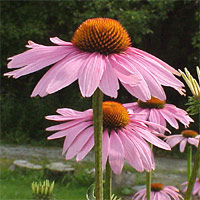
Coneflower (Echinacea) is a North American native perennial sporting daisy-like flowers with prominent raised centers. Beyond its ornamental value, the flower, plant, and root of some species are used in herbal remedies.
Renowned as a medicinal plant, coneflower is a long-blooming perennial for borders, wildflower meadows, and prairie gardens. Blooming from midsummer to fall, plants are relatively drought-tolerant and rarely bothered by pests. Flowers attract butterflies, while seed heads draw songbirds in winter. Colors include rose, purple, pink, white, and a newer orange variety. Height ranges from 2 to 4 feet depending on variety.
Select a site with full sun to light shade and well-drained soil.
Plant in spring, spacing plants 1 to 3 feet apart depending on variety. Prepare the bed by loosening soil to 12–15 inches and mixing in a 2- to 4-inch layer of compost. Dig a hole twice the diameter of the pot. Remove the plant from its container, place it so the top of the root ball is level with the soil surface, backfill gently, firm soil, and water thoroughly.
Apply a thin layer of compost each spring, followed by a 2-inch mulch layer to retain moisture and control weeds. Water during summer if rainfall is less than 1 inch per week. Deadhead spent flowers to extend bloom period, but leave late-season flowers to mature—seed heads attract birds. Divide plants every 3–4 years in early spring as new growth begins.
Why Won't My Venus Flytrap Close? The Critical Role of Light
Rescuing Sarracenia from Fungal Rot: Radical Rhizome Surgery and Rehabilitation
Reviving an Aging Drosera capensis: Cut Back & Propagate
Carnivorous Plants for Mosquito Control in Hot Climates: Reality Check
Choosing Sarracenia for Northeast Iowa and Finding Wild Populations
Rescuing a Nepenthes from Full Sun: Proper Light and Acclimation
Fertilizer Myths: Aquarium Products and Hydrogen Peroxide Don't Help Houseplants
Ponytail Palm in Pots Without Drainage: Crown Rot from Overwatering
Guzmania Bromeliad Care: Don't Repot, Water Soil Not Cup
Mystery Plant Likely Sedum or Agave, Not Bromeliad
Stromanthe Care: Potbound Is Good, Don’t Divide
Propagating Pencil Plants (Euphorbia tirucalli): Cutting and Rooting Tips
Copyright © www.100flowers.win Botanic Garden All Rights Reserved