


Aaron uses a 75W incandescent "spot-gro" bulb 8 inches above a N. × 'Deroose Alata' for 14 hours. Pitcher tops blacken and curl on the light side, though the plant is growing vigorously. He asks if it's natural aging or light burn.
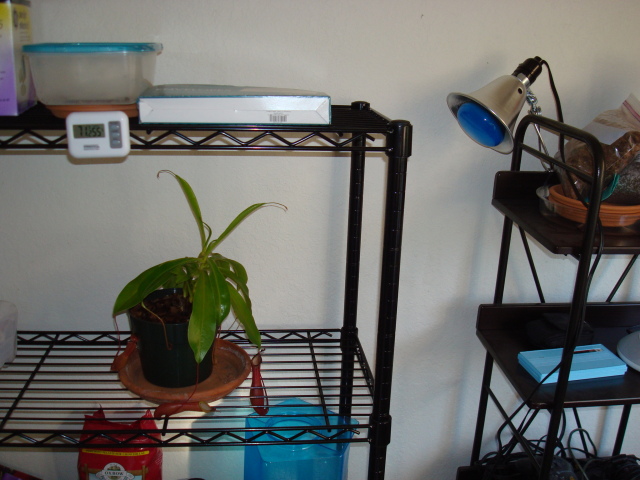
Overall setup showing incandescent bulb
Jeff Dallas: "I can see that you definitely have one of those incandescent grow bulbs. They are too hot and not bright enough where it counts. Switch over to the largest compact fluorescent you can find that will fit in your fixture. If possible, a 'Daylight' type will provide a better spectrum since it is your primary light source."
The blackened pitcher tips are heat damage from the incandescent bulb. Fluorescent light runs cool and provides usable spectrum.
Winter Lighting for Highland Nepenthes in Wisconsin: Shop Lights Over SAD Lamps
Reviving Drosera Capensis: Proper Watering and Lighting for Cape Sundews
Net Pots for Nepenthes: Worth the Cost?
Choosing Plant Lights for Carnivorous Plants: Wattage and Setup
Lowe's "Plant Light" for Carnivorous Plants: Is 1600 Lumens Enough?
Light Spectrum for Highland vs. Lowland Nepenthes: Atmospheric Filtering Theory
Winter Dormancy for Sarracenia in a Basement: Light, Temp, and Timing
Supplemental Lighting for Nepenthes on a Windowsill
Nepenthes Miranda and Sanguinea Losing Pitchers: Too Much Light?
Photoperiod Management for Nepenthes: Seasonal Light Adjustments and Flowering
Mounting High-Output Fluorescent Lights for Nepenthes: Vertical Hanging and Glare Control
Cross-Pollinating Carnivorous Plants and Grow Light Electricity Costs
Nepenthes Pitcher Troubles: Light, Fertilizer, and Repotting
Cephalotus Lighting Requirements: Why Fluorescent Beats Incandescent for Indoor Growth
Copyright © www.100flowers.win Botanic Garden All Rights Reserved