


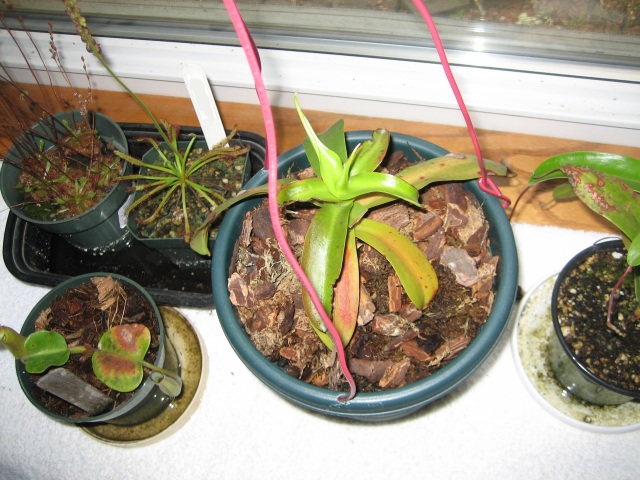
A grower reported their Nepenthes sanguinea producing progressively smaller leaves with burnt edges, eventually ceasing tendril formation entirely. The plant was grown in 1:1 long-fiber sphagnum and orchid bark, watered with rainwater, and received 4–5 hours of direct sun before being moved to a bright southwest window as temperatures dropped.
Despite the concerning leaf changes, the new growth appeared green, shiny, and firm – signs of a fundamentally healthy plant. The smaller leaves and lack of tendrils are typical responses to environmental shifts.
The accompanying sundews suggested the current light duration may be insufficient for optimal Nepenthes growth. Consider T5 or LED grow lights for reliable photoperiods.
Oak Tree Establishment: Drought Shock and Root-First Growth
Nepenthes Leaf Spotting: Sunburn and Cultural Stability
Why an Indoor Nepenthes Isn’t Pitchering: Light and Stability
Nepenthes Lower Leaves Yellowing: Normal Aging & Light Response
Rescuing an Overwatered Nepenthes sanguinea: Drainage and Stability
Diagnosing Leaf Curl in Nepenthes 'Miranda' Under Fluorescent Light
Nepenthes Transplant Shock: Yellowing Older Leaves After Repotting
Brown Spots on Nepenthes 'Miranda' Leaves: Sunburn or Leaf Miners?
Nepenthes sanguinea Leaf Reddening: Sun Adaptation, Not Burn
Revitalizing a Declining Nepenthes sanguinea
Will Old Nepenthes Tendrils Develop Pitchers Later? Species-Dependent Timing
Nepenthes sanguinea Wilting Despite Watering: Chronic Dehydration Damage
Nepenthes lowii White Blotches: Aging Leaves or Heat Stress?
Copyright © www.100flowers.win Botanic Garden All Rights Reserved