


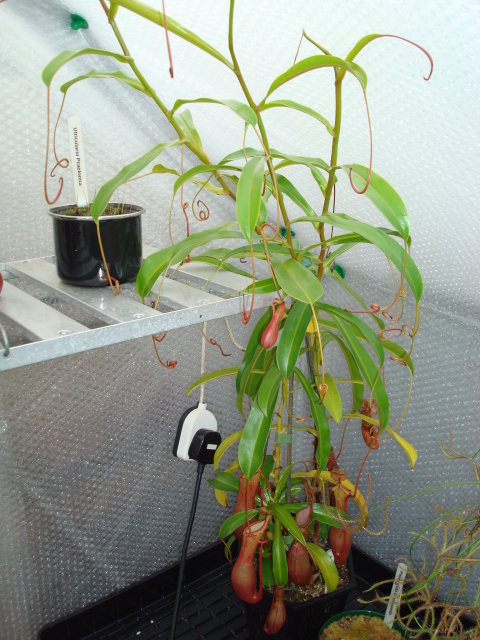
Nepenthes × ventrata
Your plant is transitioning to upper pitchers. As Nepenthes vines climb, they naturally produce smaller, differently shaped upper pitchers — adapted for different prey and light conditions in the canopy.
The photo shows vigorous growth, good color, and active pitchering. The shift to smaller, redder upper pitchers with lighter leaves is exactly what a happy, maturing ventrata does.
Prune the vine back to basal rosette growth. This forces new basal shoots with large lower pitchers. But it's purely aesthetic — the plant is fine either way.
Those 10–13" pitchers are lower pitchers on young, unvined plants. Yours has simply matured.
Red and Black Leaf Coloration on Nepenthes rafflesiana: Light Stress vs. Burn
Nepenthes in Metal Pots? Drainage, Light, and the Denmark Grower’s Fix
Nepenthes jacquelineae and ventricosa Outdoors in Zone 9: Seasonal Temperature Management
Nepenthes Not Pitchering? It's Almost Always Light, Not Humidity
Nepenthes Lower Leaves Yellowing: Normal Aging & Light Response
Diagnosing Leaf Curl in Nepenthes 'Miranda' Under Fluorescent Light
Outdoor Nepenthes in San Diego: Soil Mix, Repotting, and Cuttings
Nepenthes Leaf Spotting: Sunburn and Cultural Stability
“Poi Dog” Nepenthes Not Pitchering After Multiple Stresses
Brown Spots on Nepenthes 'Miranda' Leaves: Sunburn or Leaf Miners?
Nepenthes 'Miranda' Not Pitchering: Low Humidity Is the Cause
Flytrap and Nepenthes Care: Light, Soil, and Acclimation
Nepenthes Ventrata Pitchers Shriveling After Shipping: Acclimation Explained
Copyright © www.100flowers.win Botanic Garden All Rights Reserved