


A grower detailed their 10-gallon Pinguicula terrarium: chrome reflectors, LECA drainage, FlyTrap Store mix, aeration tubing for water-table access, small fan, reptile hood with two 25W daylight CFLs. Plants (cyclosecta, ehlersiae, esseriana ×2, jaumavensis) improved but weren’t coloring up. Day temps 75–85°F, humidity 50–60%. They asked about a 24″ 6-bulb T5 HO fixture (12,000 lumens, 6500K) and encouraging moss.
Dan Bowen praised the setup—very similar to his own successful terrariums. The 6500K T5 would be excellent for color and moss growth. Slightly close the top gap to raise humidity (watch for mold). Light distance and photoperiod (hours per day) also drive coloration.

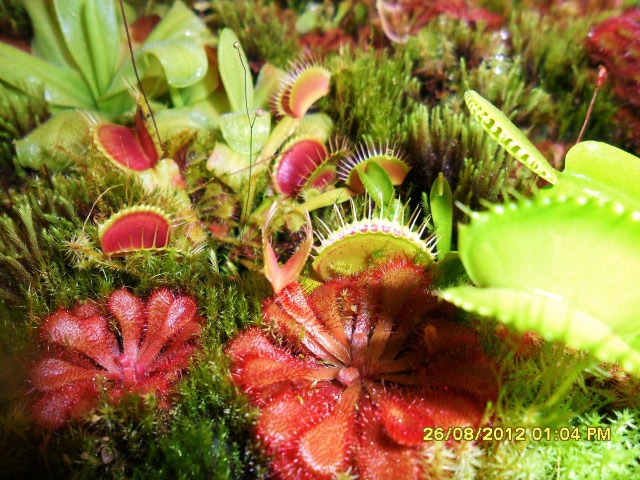
Terrariums for Carnivorous Plants: Pros, Cons, and Mold Prevention
Lighting a Carnivorous Plant Terrarium for a Dining Room Centerpiece
Setting Up a 10-Gallon Carnivorous Plant Terrarium
Terrarium Plant Selection: Expert Recommendations and Philosophy
Designing a 20-Gallon Carnivorous Plant Terrarium and Growing VFTs in Kentucky (Zone 6)
Lighting a 4-Foot Terrarium: T8 vs T5 for High-Light Carnivorous Plants
Discolored Nepenthes in a Terrarium: Light, Water, and Tank Maintenance
Terrarium vs. Windowsill for Mixed Carnivores in Canada: Light, Dormancy, and Species Separation
Building a Carnivorous Plant Terrarium: Lighting, Soil, Dormancy & Common Mistakes
Cooling Terrariums for Heat-Sensitive Carnivorous Plants: Fans, Ice, and Peltier Options
Why Terrariums Are Poor Choices for Carnivorous Plants
Terrarium Setup with Hydroton and Sphagnum Moss: Good Idea?
Desk Lamp Light for Terrarium Carnivorous Plants: Wattage and Species Needs
Copyright © www.100flowers.win Botanic Garden All Rights Reserved