


Chris noticed twisted, curled new growth on a N. ventricosa × aristolochioides (and a basal shoot) two months after purchase. Other nepenthes nearby were fine. Grown on a rack in a bright SSW window with distilled water.
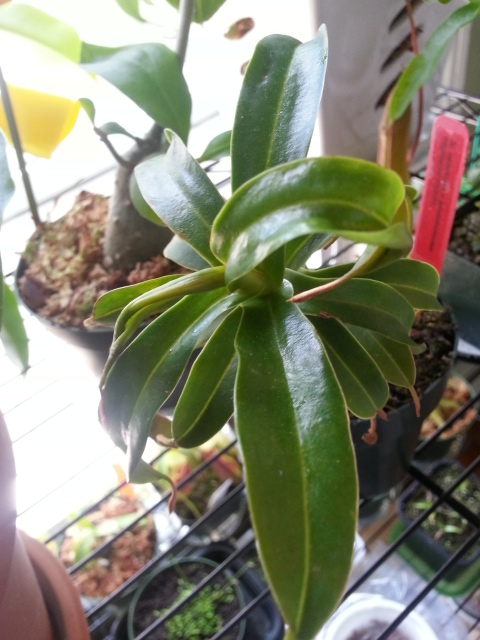
Plant
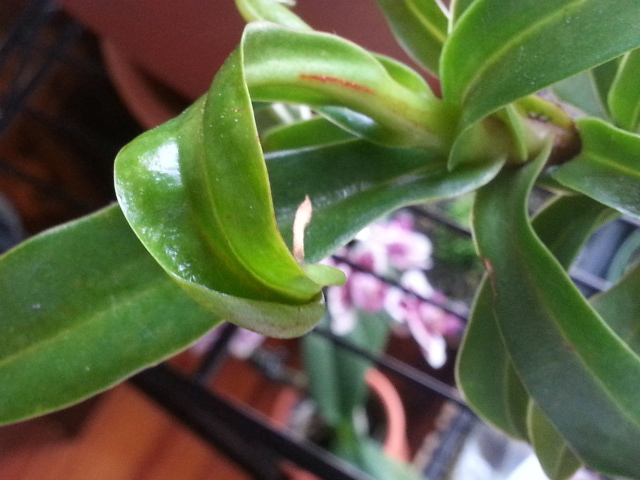
Closeup
Jeff Dallas suspected pests. He advised close inspection with a hand lens for thrips (tiny, elongated bugs on leaf undersides). If found, treat with Bayer Rose & Flower insect killer or commercial insecticidal soap (safe on Nepenthes, not on sundews/butterworts/flytraps).
Follow-up: Chris found round, reddish-orange, fast-moving mites—likely spider mites. Jeff recommended insecticidal soap (arthropods don't easily develop resistance), treating all nepenthes, and checking other houseplants. Follow label directions carefully to avoid phytotoxicity.
Good Growing!
Jeff Dallas
Sarracenia Northwest
https://www.cobraplant.com
Nepenthes Ventricosa x Truncata: Troubleshooting Small, Curled New Leaves
Identifying a Gubler's Orchids Nepenthes: Likely N. sanguinea
Mold on Nepenthes sanguinea Pitchers: Harmless Nectar Mold
Nepenthes Stems Turning Brown at Base: It's Bark, Not Death
Nepenthes northiana: Ultra-Lowland Nightmare for Indoor Growers
Nepenthes miranda Flowering and Leaf Loss: Normal Vine Maturation
Nepenthes ampullaria: Terrarium Necessity Depends on Your Climate
Caring for Nepenthes Kuchingensis: A Lowland Hybrid
Growing Small Nepenthes in a New York Greenhouse
Pruning an Overgrown Nepenthes spathulata in a Terrarium
Identifying the Nepenthes Hybrid in the "Asian Pitcher Plant Hybrids" Website Image
Red Leaves on Nepenthes: A Good Sign, and Pond Water Testing
Accelerating Nepenthes khasiana Growth: Light, Temperature, Soil, and Foliar Feeding
Copyright © www.100flowers.win Botanic Garden All Rights Reserved