


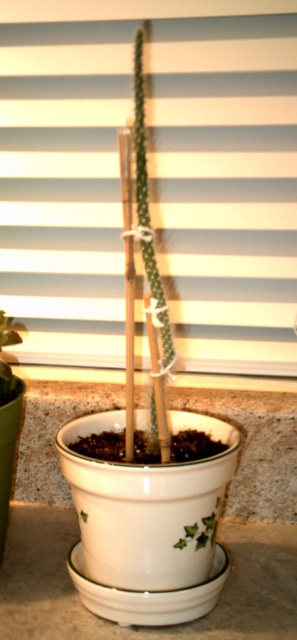
A rapidly growing, extremely skinny cactus requiring staking, discovered in a Phoenix yard and kept indoors. Expert consultation suggests possible Cleistocactus, Echinopsis, or Aporocactus (rat tail cactus), but identification is impossible due to severe stretching.
The "crazy fast growth" is actually desperate light-seeking:
| Factor | Requirement |
|---|---|
| Light | MAXIMUM - south window, gradual acclimation |
| Pot size | Smaller, well-draining |
| Soil | Sandy, fast-draining mix |
| Water (winter) | Sparingly - dormant period |
| Water (summer) | When completely dry |
Existing etiolated growth is permanent. New growth under proper light will be normal. The plant may never be fully ornamental but can become healthy. Consider propagation from any normal offsets for a fresh start.
Propagating Golden Barrel Cactus: Only Offsets Work
Watering Cacti: When Dry, Not on a Schedule
Night-Blooming Cereus: Origins and Growth Habit
Understanding Lumens Ratings on GE Daylight T12 Tubes and Heliamphora Temperature Needs
Opuntia Cactus Indoors: Brown Spots, Lean & Light Needs
Schefflera Not Growing After Repotting: Light and Fertilizer Issues
Rescuing a Stress-Damaged Columnar Cactus After Relocation
Prickly Pear Pad Propagation: Yellowing Top on Rooted Cutting
Artificial Light Burn on Moon Cactus: Acclimation Protocol
Castle Cactus Corking: Normal Healing, Not Disease
Grafting Tiny Echinopsis Seedling After Rot
Cactus & Lucky Bamboo: Too Much Light?
Pencil Cactus (Euphorbia tirucalli): Geometric Succulent Stems, Toxic Sap
Copyright © www.100flowers.win Botanic Garden All Rights Reserved