


Ben reported algae/rust spreading upward on his live oak trunk, concerned it might kill the tree and seeking fungicide treatment.
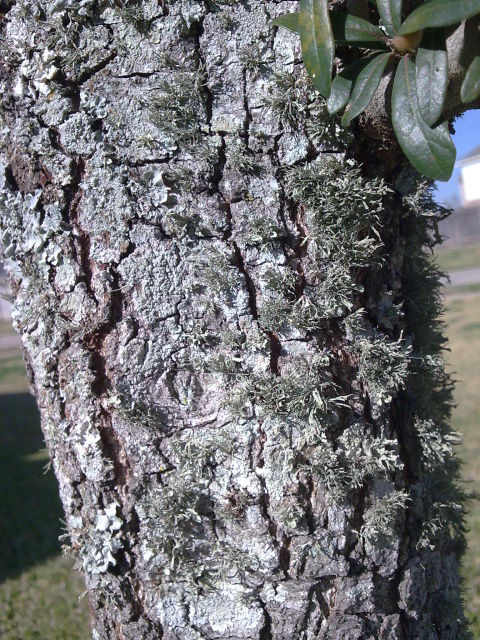
Melissa identified the growth not as algae or disease, but as Tillandsia—commonly known as Spanish moss, a bromeliad epiphyte. This is a harmless, non-parasitic plant that uses the tree only for support.
The oak's reduced greenness was a separate issue. Melissa recommended late winter fertilization (late February) with 13-13-13 fertilizer at 2 pounds per year of tree age.
Spanish moss does not harm trees—it's an aesthetic concern only. Some people appreciate its ornamental value; others find it messy. The tree's health depends on proper nutrition and care, not on removing this benign epiphyte.
Spider Web-Like Cocoon on Live Oak: Need Photo for ID
Live Oak Trunk Split: Lightning, Decay, or Oak Wilt?
Live Oak Sudden Death: Grubs, Black Ooze, and Phytophthora
Diagnosing One-Sided Stunted Growth in Live Oak Trees
Live Oak Tree Infested with Banded Hickory Borers: Identification and Treatment
Live Oak Near Pool: Roots Not the Crack Cause
Live Oak Improper V-Cut: Borer Risk and Structural Weakening
Live Oak & Fill Soil: Why 2-3 Feet of Fill Will Kill Your Tree
Live Oak Surface Roots: Cover with Sand, Never Cut
Live Oak Pruning: Stop Topping, Prune Low Branches in Winter
Live Oak Bark Shedding: Borer Infestation Under Stress
Live Oak Recovery After Vehicle Impact: Assessment and City Negotiation
Transplanting a 25-ft Live Oak: Professional Equipment Required
Newly Planted Live Oak Declining: Transplant Shock or Planting Failure?
Copyright © www.100flowers.win Botanic Garden All Rights Reserved