


Those corky, blister-like bumps on the undersides of your camellia leaves are classic oedema (edema)—a physiological disorder, not a disease. It occurs when roots absorb water faster than leaves can transpire it, causing cells to burst. The result: raised, corky spots that look alarming but are harmless long-term.
Your camellias, planted in June with afternoon sun, were likely overwatered during hot weather out of caution. The fix is simple: stop watering so frequently. Let the soil dry between waterings. Also, limb up the overhead tree to increase light and air circulation, which boosts transpiration. As the plants mature and roots establish, symptoms will fade on new growth. No fungicide needed.
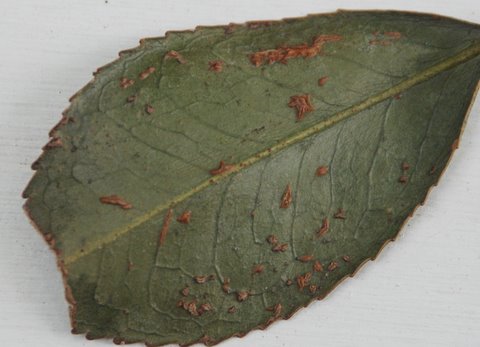
Camellia oedema on leaf underside
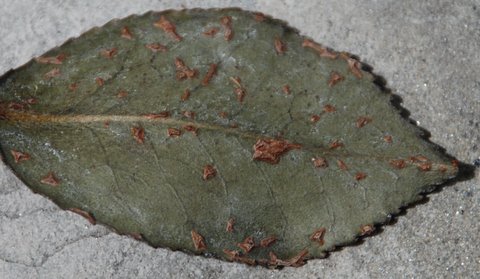
Camellia oedema close-up
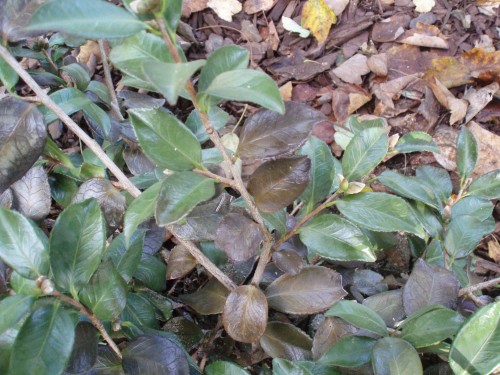
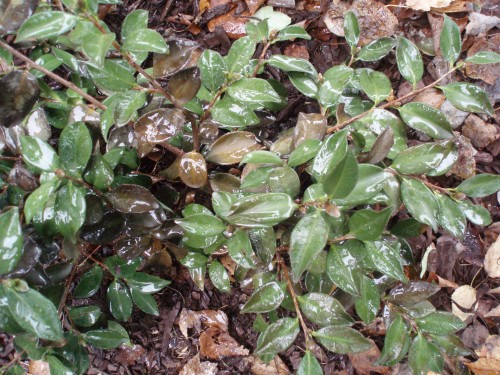
Sooty Mold on Camellia Hedge: Caused by Scale Insects
Indoor Camellia Bud Drop & Leaf Loss: Light, Temp & Humidity
Rooting Camellia Cuttings Under Mist: Timeline and Success Signs
Camellia japonica: Japanese Camellia for Winter Interest
Marge Miller Camellia – Prostrate Camellia for Cascading
Camellia 'Chansonette': Pendulous Habit with Brilliant Pink Double Blooms
Camellia 'Debutante': Early‑Blooming Light Pink Peony‑Style Flowers
Camellia 'Glen 40': Deep Red Formal Double Blooms for Shade Accents
Camellia 'Kumasaka': Bright Rose‑Pink Double Blooms for Shade
Camellia 'Magnoliaeflora': Blush Pink Semi‑Double Blooms for Milder Climates
Camellia 'Pink Yuletide': Fragrant Pink Blooms with Yellow Stamens for Winter
Camellia 'Setsugekka': Large White Semi‑Double Blooms with Ruffled Edges
Camellia 'Yuletide': Fiery Red Single Blooms with Yellow Stamens for Winter
Marge Miller Camellia: World's First Prostrate Camellia for Groundcover and Cascading
Copyright © www.100flowers.win Botanic Garden All Rights Reserved