


Investing time and effort into fall fescue reseeding only to get a weed patch is frustrating. The culprit is often overlooked: old seed with poor viability.
Every seed bag carries a germination test date. In this case, the seed was tested in October 2010 but planted in October 2011—a full year later. Stored in typical garage or shed conditions (often hot and humid), the seed lost viability.
When viable grass seed fails to germinate, the prepared seedbed—loose soil, moisture, and fertilizer—becomes the perfect environment for weed seeds already present in the soil. Nature abhors a vacuum.
If you've already planted old seed, wait 2-3 weeks. If germination is sparse, overseed immediately with fresh seed—no need to re-prepare the bed. The new seed will fill gaps before weeds dominate.
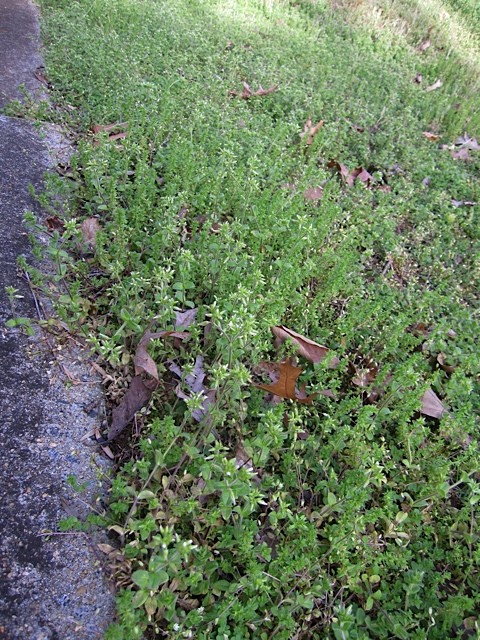
Weeds quickly colonize when grass seed fails to establish
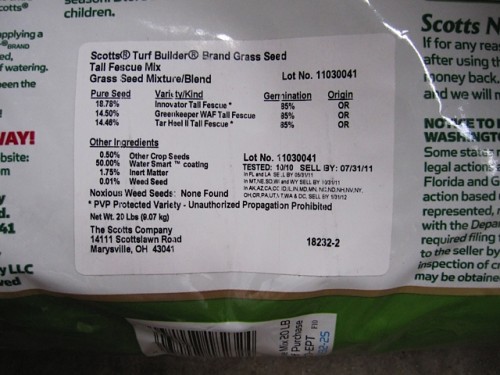
Seed tag showing October 2010 test date—too old for 2011 planting
Crabgrass Remnants in Fescue Lawn: Don't Pull, Prevent Next Year
Fescue Seeding Failure: Too Much Seed Causes Pythium Blight
Late-Season Fescue Seeding: Still Possible with Warm Soil
Evaluating 'Black Beauty' Fescue Seed
Patch Perfect Grass Seed: Not Suited for Georgia Heat
Does "No Mess" Bird Seed Still Cause Weeds? Test It Yourself
Spreader Setting for Kentucky 31 Fescue: Calibrate for 8-10 lbs/1000 sq ft
Weed Control on a Steep Berm: Solarization, Groundcovers & Mulch
Pre-Seeding Weed Control on New Construction Sites: Glyphosate Over Pre-Emergents
Starting Grass Seed in a Former Flower Bed: Timing and Weed Control
Why Birds Ignore Your Feeder: It's Not the Seed
Reviving 20-Year-Old Tomato Seeds: Tips for Germinating Heirloom Treasures
Using Wet, Clumped Fertilizer: Absorb with Cat Litter, Don't Make Tea
Copyright © www.100flowers.win Botanic Garden All Rights Reserved