


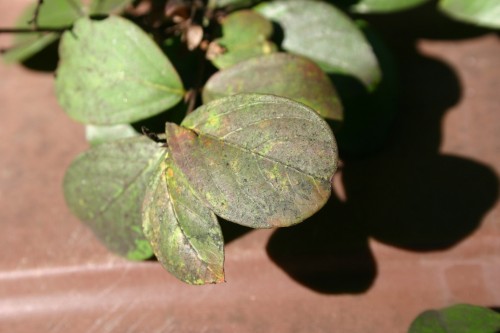
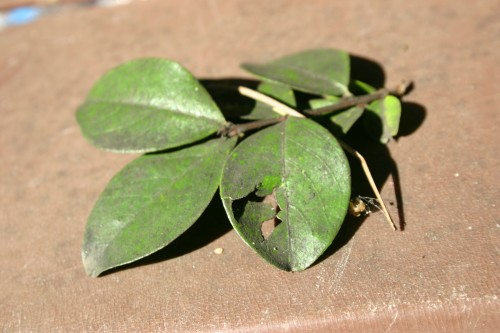
Charcoal-black leaves and sticky residue indicate crapemyrtle aphids. By fall, populations explode, coating surfaces with honeydew that feeds sooty mold. Winged aphids may rain down on passersby.
Apply systemic insecticide containing imidacloprid in spring for season-long suppression. The black mold will weather away once aphids are gone.
Trumpet Vine (Campsis) Indoor Decline: Fungus, Leaf Drop, and Bloom Strategy
Peace Lily Black Leaves: Soluble Salt Buildup from Bottom Watering
Dull Leaves on Meyer Lemon and Acanthus: Aphids, Dust, and Nutrition Fixes
Iris Aphids: Wash Off, Don’t Spray
Fall Aphid Outbreaks: Identification, Natural Control, and Sooty Mold
Crapemyrtle Aphids: Beneficial Insects' Buffet, Not a Crisis
Gardenia Sooty Mold: Control Aphids, Wash Off Mold
Brazilian Red Cloak Leaf Damage: Environmental Stress, Not Disease
Overwatering Causes Black Tip Rot in Pachypodium (Madagascar Palm)
Sooty Mold on Houseplants: Amaryllis and Ficus
Fire Blight on Chanticleer Pear: Identification and Management
Black Growths on Lemon Tree Branches: Scale or Aphids?
Crape Myrtle Cottony Aphids: Sticky Webs and Systemic Control
Copyright © www.100flowers.win Botanic Garden All Rights Reserved