


1. Home
  2. Question and Answer
  3. Houseplants
  4. Garden Articles
  5. Most Popular Plants
  6. Plant Nutrition

Paperbark Maple (Acer griseum): Four-Season Beauty with Peeling Cinnamon Bark

Acer griseum: The Cinnamon-Barked Treasure

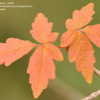
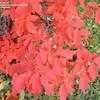
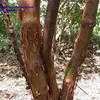
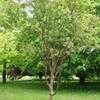
Few trees offer year-round interest like *Acer griseum*, the paperbark maple. Its claim to fame is the extraordinary bark—sheets of cinnamon-red to copper-brown peel away in paper-thin curls, revealing fresh, smooth bark beneath. Combined with trifoliate leaves that turn brilliant red-orange in fall and a graceful, small-stature habit, this Chinese native is a four-season specimen par excellence.

Botanical Profile

  • Family: Sapindaceae.
  • Genus: *Acer*.
  • Species: *A. griseum* (specific epithet = "grayish," referring to leaf undersides).
  • Habit: Deciduous small tree, 20–30 ft tall, 15–25 ft wide; upright oval to rounded; slow-growing (6–12 in./year).
  • Leaves: Trifoliate (3 leaflets), 2–4 in. long; dark green above, glaucous (gray-green) below; fall color: brilliant scarlet to orange-red.
  • Bark: **The star feature.** Exfoliates in thin, papery curls; cinnamon-red, copper, tan; begins on young wood (2–3 in. branches).
  • Flowers: Small, yellowish, pendulous clusters (spring); not showy.
  • Fruit: Paired samaras (winged seeds), 1–1.5 in.; often sterile/parthenocarpic.

Native Range and History

  • Native: Central China (Gansu, Henan, Hubei, Shaanxi, Sichuan); mixed forests, 5,000–7,000 ft.
  • Introduction to West: Ernest Henry Wilson collected for Veitch Nurseries (1901); introduced to UK/USA shortly after.
  • Conservation: Endangered in wild (habitat loss, poor regeneration); widely cultivated ex situ.

Growing Requirements

  • Hardiness: USDA zones 4–8 (some sources 5–7).
  • Light: Full sun to part shade; best bark color in full sun; best leaf color retention in part shade.
  • Soil: Moist, well-drained, slightly acidic to neutral; adaptable to clay if drained.
  • Water: Regular moisture; not drought-tolerant.
  • Propagation: Difficult: seed viability very low (<5%); cuttings difficult; grafted onto *A. saccharum* or *A. nikoense*. Hence higher cost.

Landscape Uses

  • Specimen tree: Front yard, courtyard, patio—where bark can be appreciated up close.
  • Winter garden: The peeling bark glows in low winter sun.
  • Mixed borders: Fine texture complements broad-leaved shrubs.
  • Understory: Thrives in light shade of larger trees.

Design Tips

  • Site where winter sun backlights the trunk.
  • Plant against dark evergreen backdrop (yew, holly, pine) to highlight cinnamon bark.
  • Pair with early bulbs (snowdrops, winter aconite) for late-winter vignette.
  • Mulch to root zone; avoid mechanical damage to trunk.

Pests and Diseases

Generally trouble-free. Occasional verticillium wilt in poorly drained soils; aphids on new growth; leaf scorch in drought/full sun.

Notable Cultivars

  • 'Cinnamon Flake' – selected for especially heavy exfoliation.
  • 'Gingerbread' – darker, reddish-brown bark.
  • Columnar forms (rare).

Copyright © www.100flowers.win Botanic Garden All Rights Reserved