


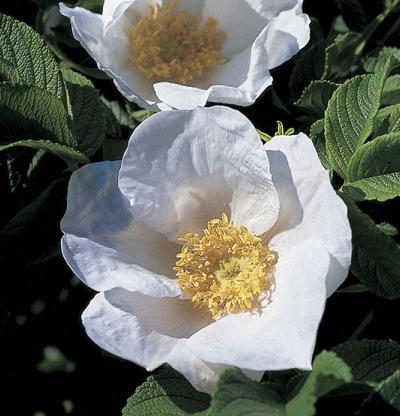
The white hedgehog rose (Rosa rugosa var. alba) is a standout shrub rose prized for its pristine, papery white blossoms that unfurl from delicate pink buds, revealing a crown of golden yellow stamens. These heavily scented flowers bloom repeatedly from spring through fall, followed by showy reddish-orange hips that persist into winter, providing seasonal interest and food for birds. Growing 3 to 6 feet tall and wide with a clumping habit, this rose forms a dense, thorny thicket of distinctively wrinkled, leathery green foliage—the species name rugosa derives from the Latin for "full of wrinkles."
Few roses match the toughness of Rosa rugosa varieties. The white hedgehog rose thrives in conditions that defeat most other roses: salt spray, strong winds, poor sandy soils, and drought once established. Its extreme cold hardiness (down to Zone 3) and disease resistance make it a low-maintenance choice for hedges, mixed borders, seaside gardens, and naturalized plantings. The fragrant blooms attract butterflies and pollinators, while the dense, thorny growth provides excellent nesting cover for songbirds.
Take softwood cuttings when bloom initiates in spring to summer; hardwood cuttings in fall. Species can be grown from seed sown in fall, or budded in summer.
While highly disease-resistant, watch for aphids, spider mites, Japanese beetles, rose slugs, and fungal issues like black spot, powdery mildew, and rust in humid conditions. Good air circulation and sanitation minimize most problems.
| Height/Spread: | 3–6 ft. tall and wide |
| Bloom Time: | Spring, Summer, Fall |
| Flower Color: | White (from pink buds) |
| Fragrance: | Strong, sweet |
| USDA Zones: | 3–8 |
| Uses: | Hedges, borders, specimen, seaside, naturalizing, cut flowers |
Copyright © www.100flowers.win Botanic Garden All Rights Reserved