


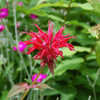
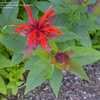
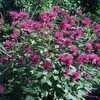
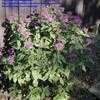
Bee balm (Monarda didyma), also called bergamot, Oswego tea, or horsemint, is a showy perennial with dense, shaggy heads of tubular red flowers atop square stems. Its fragrant foliage and long bloom time make it a favorite for bees, butterflies, and hummingbirds. It has a rich history as a Native American medicinal and beverage plant.
| Family: | Lamiaceae (lay-mee-AY-see-ee) |
| Genus: | Monarda (mo-NAR-da) |
| Species: | didyma (DID-ee-muh) |
Native to eastern North America, bee balm grows 2–4 feet tall. The leaves are opposite, toothed, and release a minty-oregano scent when crushed (similar to Earl Grey tea bergamot). It spreads by rhizomes to form colonies.
Grow in full sun to part shade, moist, rich soil. Good air circulation prevents powdery mildew. Divide every 3–4 years. Deadhead for rebloom. Hardy in USDA zones 4–9.
Bee Balm 'Petite Delight' (Monarda 'Petite Delight'): Compact Mildew-Resistant Cultivar
Wild Bergamot (Monarda fistulosa): Native Bee Balm for Prairies
Basil Bee Balm (Monarda clinopodia): White-Flowered Monarda
Horsemint (Mentha longifolia): Wild Mint with Long Flower Spikes
Eastern Bee Balm (Monarda bradburiana): Early-Blooming Native for Dry Shade
Stone Mint (Cunila origanoides): Native Perennial with Oregano-Thyme Fragrance
Red Buckeye (Aesculus pavia): A Native Shrub with Showy Red Flower Spikes
Lemon Balm (Melissa officinalis): Calming Herb for Tea and Pollinators
Beefsteak Plant (Perilla frutescens): Shiso for Asian Cuisine
Lime Mint 'Lime' (Mentha × piperita subsp. citrata 'Lime'): Intense Lime-Scented Mint
Clustered Mountain Mint (Pycnanthemum muticum): Pollinator Magnet with Silvery Bracts
Snow Plant (Sarcodes sanguinea): Parasitic, Blood-Red Wildflower of Coniferous Forests
Copyright © www.100flowers.win Botanic Garden All Rights Reserved