


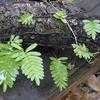
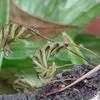
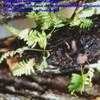
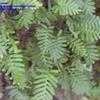
The Resurrection Fern (Pleopeltis polypodioides) is famous for its ability to survive extreme desiccation, curling up and appearing dead when dry, then reviving within hours of rainfall. A common epiphyte on live oaks in the southeastern US.
| Family: | Polypodiaceae |
| Genus: | Pleopeltis (plee-oh-PEL-tiss) |
| Species: | polypodioides (pol-ee-pod-ee-OY-deez) |
| Synonym: | Polypodium polypodioides |
| Synonym: | Acrostichum polypodioides |
| Synonym: | Marginaria polypodioides |
| Synonym: | Pleopeltis polypodioides var. acicularis |
| Synonym: | Pleopeltis polypodioides var. michauxiana |
Fronds are 10–25 cm long, pinnatifid, leathery, and covered with tiny scales. When dry, they curl inward, exposing the scaly underside. Upon hydration, they unfurl and turn bright green.
Grows on tree bark, rocks, and logs in humid forests. In cultivation, mount on bark or wood; mist frequently. It can tolerate periods of drought, making it ideal for xeriscaping with epiphytes.
Japanese Climbing Fern (Lygodium japonicum): Invasive Vine-Like Fern to Avoid
Royal Fern (Osmunda regalis): Regal, Flowering Fern for Watersides
Hart's Tongue Fern (Asplenium scolopendrium): Strappy, Evergreen Fern for Lime-Rich Shade
Grub Fern (Polypodium formosanum): Creeping Epiphyte with Caterpillar-Like Rhizomes
Clayton's Interrupted Fern (Osmunda claytoniana): Unique Fern with Interrupted Fronds
Delta Maidenhair Fern (Adiantum raddianum): Classic Houseplant with Triangular Fronds
Santa Rosa Fern (Aglaomorpha coronans): Bold, Epiphytic Fern with Nesting Habit
Lace Fern / Palapalai (Microlepia strigosa): Soft, Lacy Hawaiian Native for Lei Making
New York Fern (Thelypteris noveboracensis): Colonizing Native for Woodland Groundcover
Leathery Polypody (Polypodium scouleri): Coastal, Leathery Fern for Rock Crevices
Lygodium microphyllum: Small-leaved Climbing Fern
Copyright © www.100flowers.win Botanic Garden All Rights Reserved