


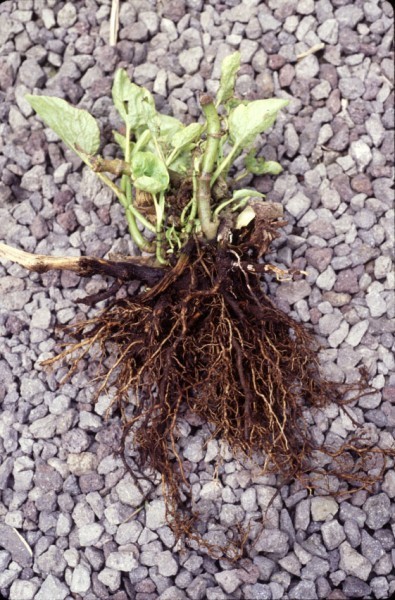
When a houseplant declines despite corrected watering — yellowing leaves, wilting, overall collapse — root rot is often the culprit. This condition stems from either prolonged waterlogging (which suffocates roots) or opportunistic soil fungi that activate in wet conditions.
Oxygen starvation: Constantly saturated soil deprives roots of oxygen, causing them to die and decay. The rot then spreads to healthy roots even after drainage improves.
Fungal pathogens: Soil-borne fungi like Pythium, Phytophthora, and Rhizoctonia can lie dormant for years, then explode when overwatering creates favorable conditions.
Gently unpot the plant and examine the roots. Healthy roots are firm and pliable, with a pale or light brown color. Rotted roots are black or dark brown, mushy, and may slough off when touched. A foul, swampy odor often accompanies advanced cases.
Water only when the top inch of soil is dry. Withhold fertilizer until new growth appears, as feeding a stressed plant can cause further damage. With prompt action, many plants recover fully.
Avocado Root Rot in Poorly Drained Soil: Assessment and Options
Rescuing Ponytail Palms from Root Rot After Excessive Rain
Phalaenopsis Crown Rot, Mealybugs, and Root Rot: Multi-Problem Rescue
Minor Root Rot in New Phalaenopsis: Wait to Repot
Tomato Growing Secrets: pH, Planting Depth, Pruning, and More
5 Essential Care Tips for Thriving Houseplants
How to Propagate Houseplants Using Runners: Layering & Air Layering Techniques
Unknown Nepenthes Decline: Humidity and Weak Fertilizer May Help
Saving a Sarracenia alata from Root Rot
Nepenthes Root Rot Recovery: Superthrive and Humidity Boost
Mother-in-Law's Tongue (Sansevieria) Root Rot: Salvage or Propagate?
Gardening Fundamentals: Watering, Pest Control, Soil, and Weed Prevention
Gardening for Everyone: Essential Tips for Healthy Plants
Why Go Organic? 6 Compelling Reasons to Ditch Chemicals in Your Garden
Copyright © www.100flowers.win Botanic Garden All Rights Reserved