


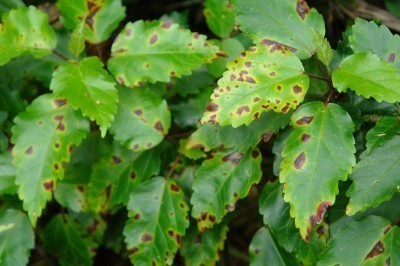
Angular leaf spot, caused by Pseudomonas syringae pv. lachrymans (cucurbits) and Xanthomonas fragariae (strawberries), creates distinctive angular, vein-limited lesions. Bacteria survive in seed and debris; spread by water splash in warm, humid conditions (75–82°F / 24–28°C). No cure once systemic; prevention and early removal are critical.
Angular leaf spot is a water-borne bacterial disease. Every practice that keeps foliage dry (drip irrigation, spacing, mulch, morning water) and removes inoculum (rotation, sanitation, clean seed) reduces risk. Once the angular lesions appear, that plant is a loss—focus on protecting the rest.
Indian Hawthorn Leaf Spot and Chlorosis: Dual Diagnosis and Treatment
Entomosporium Leaf Spot on Photinia and Indian Hawthorn
Solving Widespread Leaf Scorch and Drop in Alkaline Central Valley Soils
Shade Plants for a North-Facing Michigan Foundation
Brown Spot on Phalaenopsis Leaf: Bacterial Infection Emergency Response
Oak Galls: The Strange Green Ball with Purple Hairs
Identifying and Treating Springtails or Fungus Gnats in Carnivorous Plant Collections
Choosing Sarracenia for Northeast Iowa and Finding Wild Populations
Wilting Aloe with Babies: Diagnose Light and Water
What Is a Leaf Node? Pruning and Propagation Basics
Celosia Seedling Distortion: Leafminer or Malformation
What Is Gardening? Types, Scales & Purposes
Copyright © www.100flowers.win Botanic Garden All Rights Reserved