


Thanksgiving crunch time: sides chosen, turkey bought, wine stocked. For the florally challenged, Jill Rizzo and Alethea Harampolis of San Francisco's Studio Choo add the life of the party — literally — with flowers, foraged branches, and maybe a persimmon or two.
After sitting in on their studio class, an epiphany struck. No more relying on colorful corn and miniature pumpkins. With pro tips, not only can I arrange flowers (almost) like an expert, but I've discovered how to let flowers be my guides and allow arrangements to grow wild.
More: Ingredients of a Perfectly Wild Bouquet
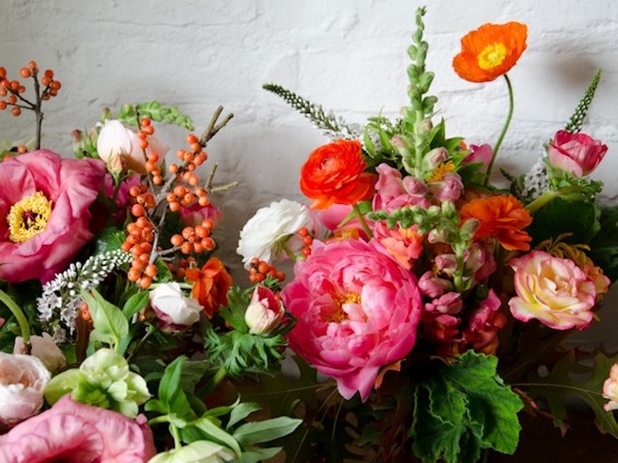
Five seconds in, my loose grasp on flower arranging basics is swiftly swatted away. The base layer is the framework — not cheap filler.
Consider how leafy foliage adds a decorative layer complementing flowers. Grab 6–10 strong stems for the base, with 2 especially bushy pieces. For beginners, a solid base makes the rest much easier.
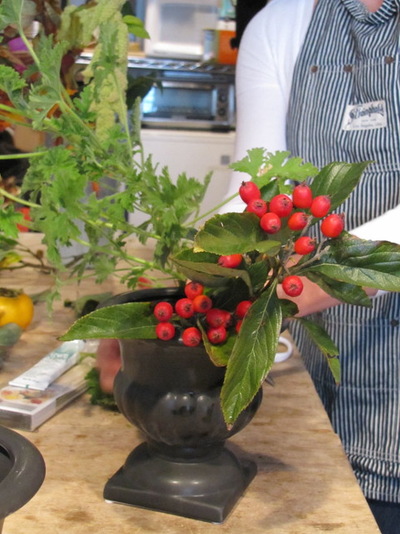
Before randomly stabbing stems, gauge how you want individual base stems to lie in the vase. Use their natural forms as guides.
For narrower cylindrical vases, stems can be 2–3× vase height; otherwise aim for 1.5× vase height. Place bushiest pieces first, with clean, leafless stems below waterline.
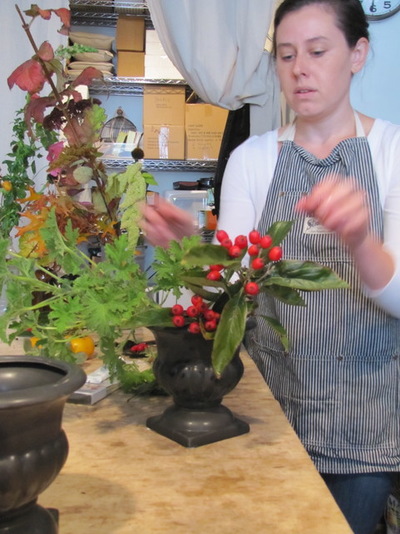
Take first two base plants, make an X with stems, and place in vase (Rizzo demonstrates with scented geranium and chokecherry). Work around the edge, crossing stems — almost like constructing a nest.
See more great bouquet ingredients
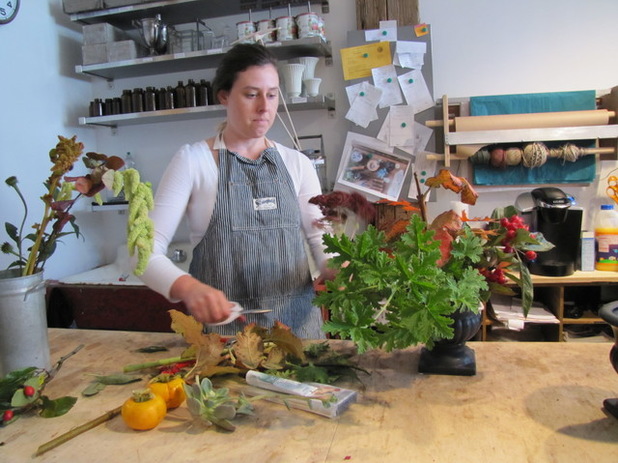
Consider where you'll use the arrangement. Mantel bouquets spread linearly; table centerpieces need to be rounded and interesting on all sides.
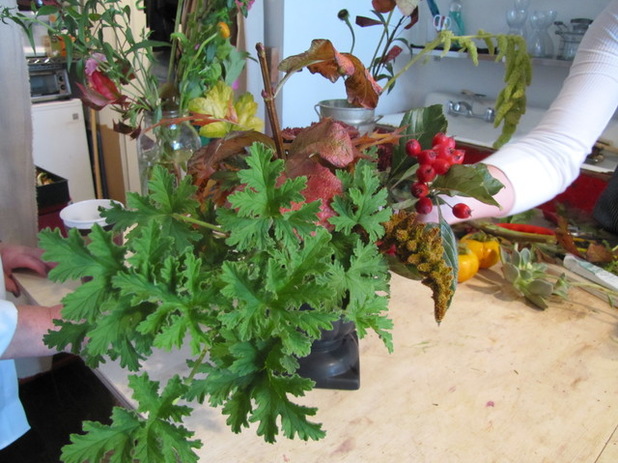
When finished, the base should be sturdy enough to withstand prodding from flower stems added later.
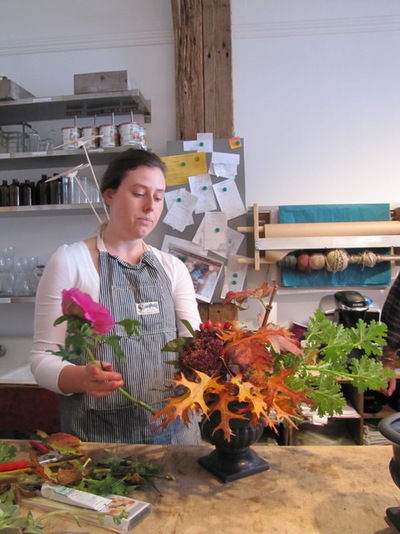
Largest, sturdiest focal flowers go next. Rizzo starts with a spectacular 'Coral Charm' peony. Let plants influence overall form and shape. Keep low and compact or angle stems out for large arching arrangements. Choose ~3 focal flowers, scatter or cluster them. Select plants blooming at different angles/heights — perfect uniformity isn't the goal.
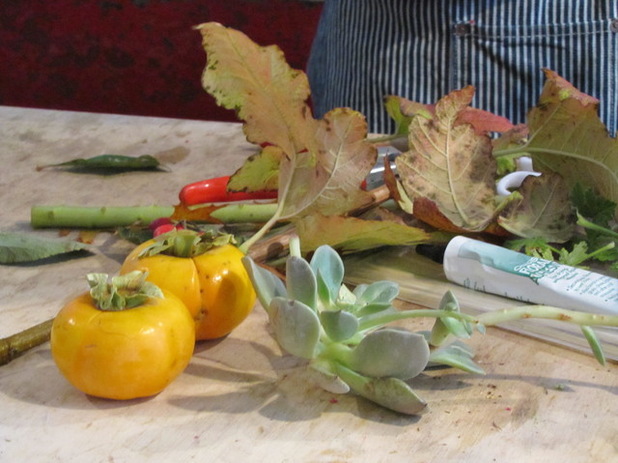
Incorporate beautiful succulents and seasonal fruits to highlight autumnal mood.
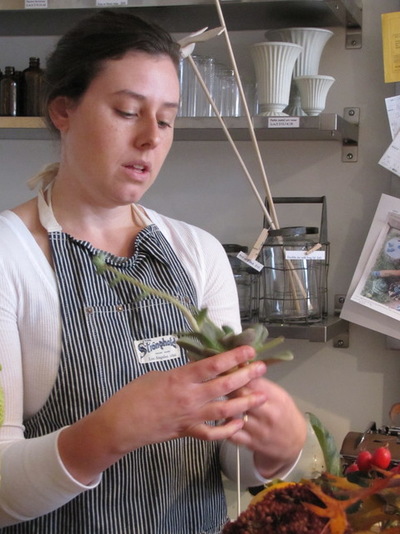
Using wooden skewers dipped in floral glue, gently stab fruit/succulent (don't puncture through), add to centerpiece following crisscross stem pattern.
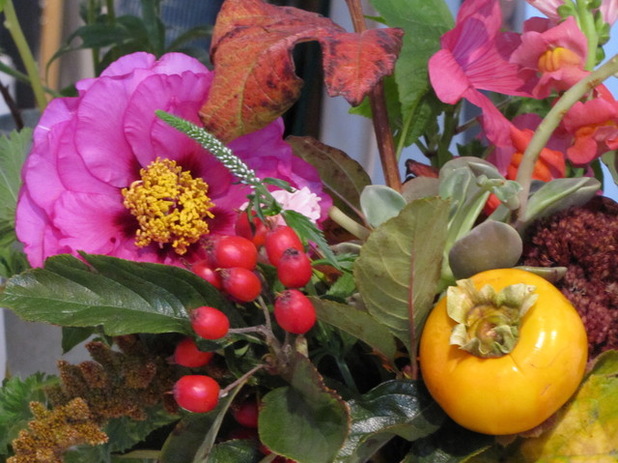
For continuity, Rizzo suggests grouping similarly colored flowers. Add to your heart's content, pausing to admire, keeping crisscross pattern and orientation in mind.
Here, chokecherries and 'Coral Charm' peonies create a luscious pink/red cluster...
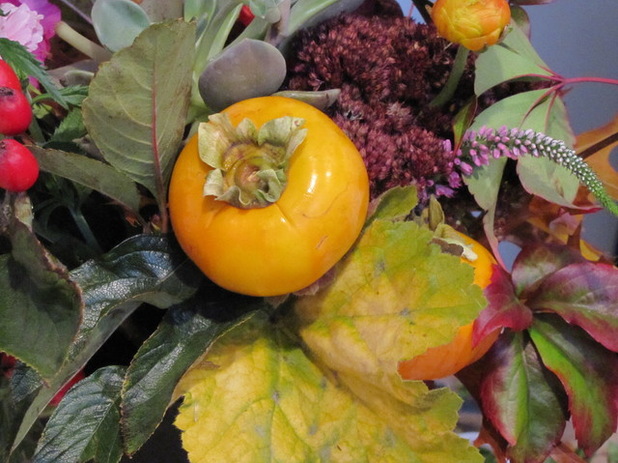
...segueing into golden hues of Heuchera 'Peach Melba' and skewered persimmons.
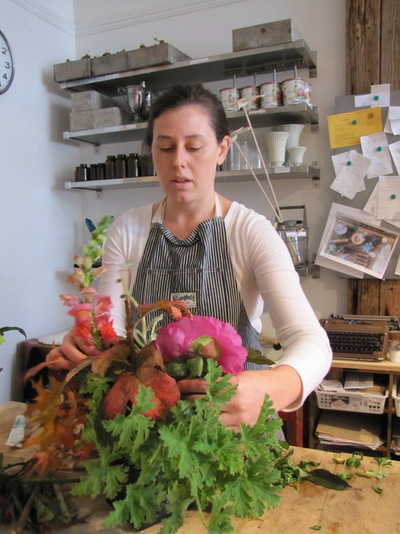
No prescribed rules for your beautifully untamed seasonal centerpiece. Finish with supporting flowers, delicate grasses, and vines from market or yard.
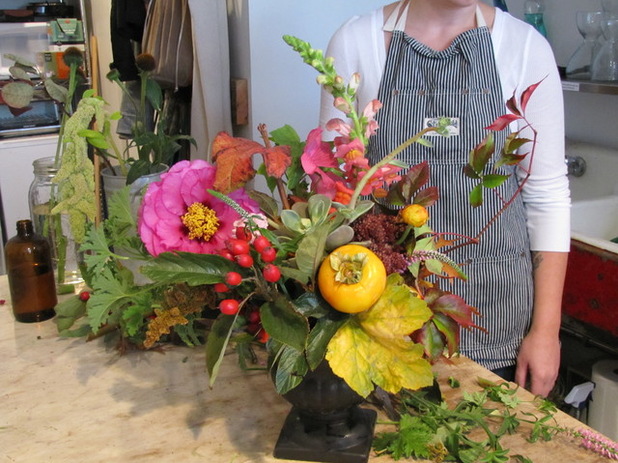
Once you believe you have a successful arrangement or run out of material, check for insecure stems needing trimming. Then place and enjoy.
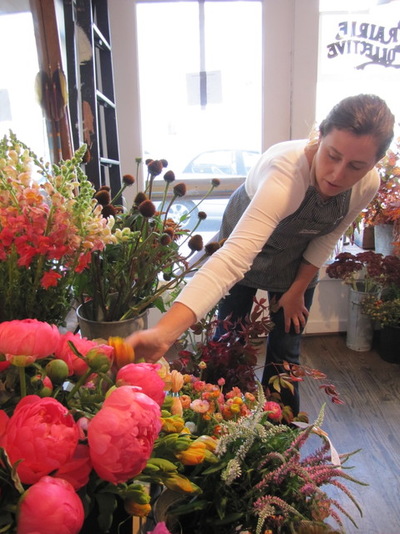
"The best advice: just try it," adds Jill. "Most common thing in class: 'I'm not sure it'll look right...' Put it in and try! It can always be taken out. We constantly play with materials and color combos — that's what keeps things interesting!"
Rooting Florist Roses: Why Cut Flowers Rarely Make Garden Plants
DIY Tropical Flower Bridal Bouquet: Step-by-Step Guide
Innovative Floral Arrangements for Gurgaon Delivery: Beyond the Bouquet
How to Dry Flowers: 4 Methods for Preserving Blooms
How to Identify Evergreen Shrubs by Leaves and Flowers
Flagpole Garden: Asiatic Lilies, Marigolds & Ice Plant in Missouri
Safe Transport of Floral Arrangements in a Minivan
Silk Flower Tower Arrangements: Flower Choices and Realism Tips
Should You Spray-Paint Wedding Flowers to Match Colors?
How to Grow Orchids: Avoid 5 Common Mistakes for Stunning Blooms
Boost Flower Blooms with Biodynamic Farming: The Earthworm Advantage
Copyright © www.100flowers.win Botanic Garden All Rights Reserved