1. Home
  2. Question and Answer
  3. Houseplants
  4. Garden Articles
  5. Most Popular Plants
  6. Plant Nutrition

String of Pearls (Senecio rowleyanus) Care: Growing the Iconic Trailing Succulent

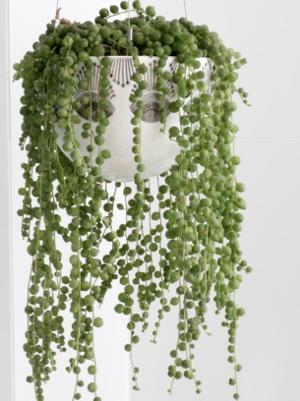
String of pearls (Senecio rowleyanus, syn. Curio rowleyanus) is a succulent masterpiece—pea-sized, spherical leaves on thread-like stems that cascade like a green necklace. Named for British botanist Gordon Douglas Rowley, it's a drought-tolerant, fast-growing trailer perfect for hanging baskets, high shelves, and xeriscape groundcover.
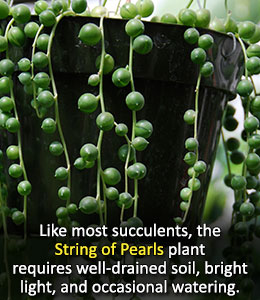
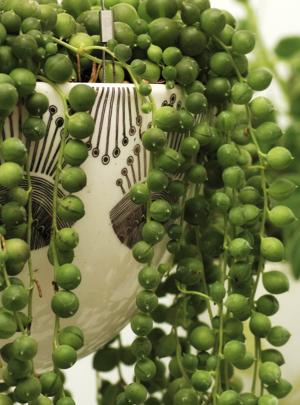
String of pearls plant String of pearls detail String of pearls hanging

Quick Reference

  • Botanical name: Senecio rowleyanus (Asteraceae)
  • Common names: String of beads, string of peas, rosary beads
  • Type: Evergreen perennial succulent; trailing
  • Trail length: 2–3 ft
  • Light: Bright indirect; 2–3 hrs direct + indirect rest of day
  • Temperature: 70–80°F spring–fall / 55–60°F winter; never <45°F
  • Humidity: Average to dry
  • Water: Low; thorough monthly; let dry well between
  • Soil: Sandy, fast-draining (cactus/succulent mix or 3:1 potting soil:sand)
  • Fertilizer: Half-strength general liquid, 1–2×/month spring–summer
  • Propagation: Stem tip cuttings (4"+)
  • Toxicity: All parts toxic—vomiting, diarrhea, dermatitis (humans & pets)
  • USDA Zones: 8a–10b outdoors

Unique Leaf Adaptations

  • Spherical shape = minimal surface area = reduced water loss.
  • Translucent "window" on each leaf admits light for internal photosynthesis.
  • Pointed tip aids water runoff.

Light

  • South or west window ideal.
  • 2–3 hrs direct morning/early afternoon; bright indirect rest of day.
  • If insufficient: 14–16 hrs fluorescent/LED daily in growing season.
  • Leggy, sparse growth = needs more light.

Soil & Potting

  • Drainage is everything. Cactus/succulent mix or DIY 3:1 potting soil:sharp sand.
  • Hanging basket or tall pot for cascade.
  • Shallow roots—wide, not deep pot.

Watering: The #1 Killer

  • Succulent = drought-tolerant. Overwatering = root rot.
  • Water thoroughly 1–2×/month growing season; less in winter.
  • Soil should be damp, not wet. Dry well before next watering.
  • Empty saucer always. No standing water.
  • Shriveling pearls = underwatering. Mushy, translucent = overwatering.

Temperature

  • Heat/drought tolerant; cold sensitive.
  • Keep 55–80°F. Avoid cold drafts, AC vents, unheated sunrooms in winter.
  • Cold exposure = leaf drop.

Fertilizing

  • Half-strength general liquid, monthly or biweekly spring–summer.
  • None fall–winter.

Propagation

  1. 4"+ healthy stem tip cutting.
  2. Place in moist succulent mix; bury leaf nodes (roots form at axils).
  3. Roots develop quickly from axils.
  4. Water sparingly until established.

Repotting

When root-bound. Use 3:1 potting soil:sharp sand or cactus mix. Handle gently—stems brittle.

Toxicity Warning

Every part is toxic. Keep away from children and pets.

  • Humans: ingestion → vomiting, diarrhea; sap → rash, irritation.
  • Dogs/cats: lethargy, drooling, vomiting, diarrhea, oral dermatitis.

Design Uses

  • Hanging basket (classic)—pearls cascade 3+ ft.
  • High shelf / macramé hanger.
  • Shallow dish as "living necklace" centerpiece.
  • Xeriscape groundcover (Zones 8b+).
  • Mixed succulent containers (trailer element).

String of pearls asks for brightness, drainage, and restraint. Give it those, and it drapes your space in living green pearls—effortless elegance from a botanical minimalist.

Copyright © www.100flowers.win Botanic Garden All Rights Reserved