| Species | Common Name | Features |
|---|
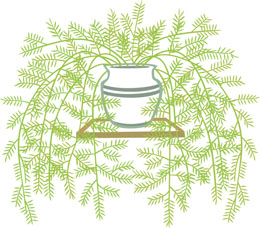
| A. densiflorus 'Sprengeri' | Emerald Fern | Arching stems; dense cladodes; classic hanging basket |
| A. densiflorus 'Myersii' | Foxtail Fern | Upright plumes; cylindrical; architectural |
| A. setaceus | Plumosa Fern | Finest texture; climbing; delicate |
| A. plumosus | Lace Fern | Very fine; horizontal layers |
| A. aethiopicus | Sprenger's Asparagus | Larger; more robust; outdoor zones 9-11 |
| A. virgatus | Broom Fern | Upright; fine; cut foliage trade |
Plant Description
- Stems: Tough, green, spiny; arching or upright
- Cladodes: Flattened stems functioning as leaves; 0.8-2 cm; in groups of 4+
- True leaves: Reduced to spines
- Roots: Fibrous mat with bulbous tubers (water storage)
- Flowers: Small, white/pink, bell-shaped; 0.3-0.5 cm; spring/late summer
- Berries: Green → red; 8 mm; 1+ black seeds
Growing Requirements
- Light: Bright indirect; tolerates low light
- Soil: Well-drained, rich; peat + perlite + potting mix
- Water: Moderate; dry slightly between; humidity helpful
- Temp: 60-75°F; min 50°F
- Zones: 9-11 outdoors; houseplant elsewhere
Propagation
Division (Best)
- Remove plant; shake soil
- Separate tuber clusters with roots
- Pot each in fresh mix
- Water; bright indirect light
Stem Cuttings
- 2-3" mature stem; oblique cut below node
- Remove lower cladodes
- Root in peat/perlite; rooting hormone helps
- Cover with plastic; 3-4 weeks
- Gradually acclimate
Seeds
- Collect ripe red berries; remove pulp
- Soak overnight
- Sow in seed mix; cover lightly
- Plastic cover; warm, bright
- Transplant when established
Care & Maintenance
- Fertilize: Spring/fall; monthly if fast growth; balanced liquid ½ strength
- Repot: Spring; when tubers crowd pot; divide or size up
- Prune: Remove yellow stems; rejuvenate by cutting to base
- Pests: Mealybugs, spider mites; treat with insecticidal soap
- Outdoor summer: Shaded location; acclimate gradually
Toxicity Warning
Pets (cats, dogs): Berries cause vomiting, diarrhea, abdominal pain. Skin contact may cause dermatitis. Keep elevated or in hanging baskets.
History Note
Popularized in Europe by German botanist Carl Ludwig Sprenger (1846-1917), who recognized its ornamental value beyond its weed status in South Africa.
Copyright © www.100flowers.win Botanic Garden All Rights Reserved