


Bradford pears are notorious for splitting in storms due to their vigorous, upright growth habit. Many vertical branches crowd the trunk, creating weak attachments. The best time to prune is in the first few years; waiting longer makes corrective pruning difficult without ruining the tree's shape.
The pile of limbs on the ground may alarm neighbors, but blossoms return fully in subsequent years. And you'll avoid the crash of unpruned limbs on your neighbor's SUV.
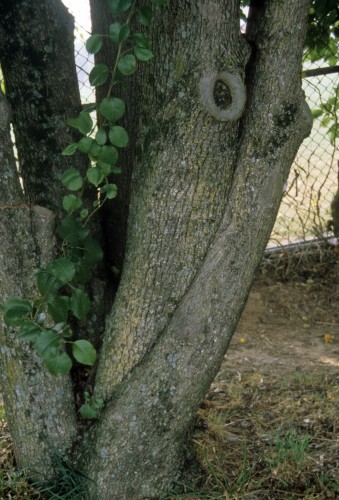
Bradford pear crowded limbs
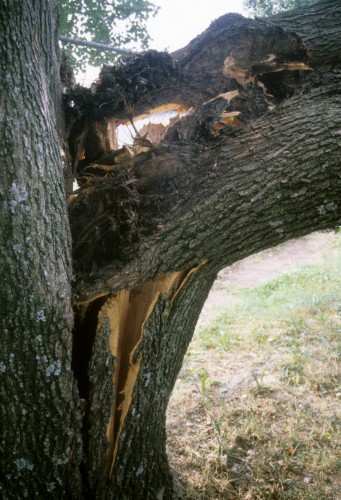
Bradford pear limb failure
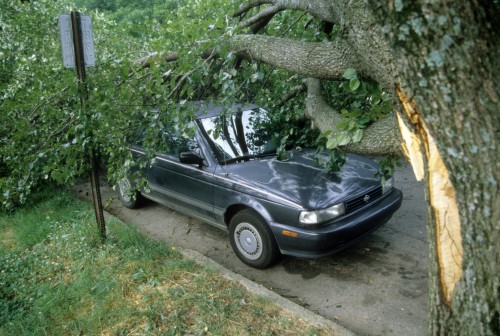
Bradford pear limb failure
MORE INFORMATION
Pruning Ornamental Shrubs and Trees
Bradford Pear Red Leaves Falling: Fire Blight or Genetic Decline?
Bradford Pear Fire Blight: Multi-Year Battle Plan
Sudden Heavy Fruiting on Bradford Pears: Genetics and Storm Risk
Fire Blight on Bradford Pear: Pruning, Disinfection, and Dormant Sprays
Bradford Pear Trunk Fungus After Heavy Rain: Likely Saprophytic
Diagnosing Decline in a Mature Bradford Pear: Boron Sensitivity and Short Lifespan
Pruning Sealant on Neighbor’s Pine: Not Required, Not Recommended
Fire Blight on Bradford Pear: Diagnosis and Management
Stopping Bradford Pear Fruit with Hormone Sprays
Bradford Pear Pruning: Winter Is Fine, Follow 5‑Step Plan
Copyright © www.100flowers.win Botanic Garden All Rights Reserved