


The American Southwest is a land of extremes: scorching days, chilly nights, alkaline soils, and scarce water. Yet its stark beauty—blue skies, tan sands, dusty greens—inspires a distinctive garden style that thrives on adaptation.
Natural/Native. The obvious choice: plants that evolved here survive effortlessly and blend with the surroundings. Works with adobe, Mission, Spanish‑Mediterranean, and contemporary architecture. Gravel paths, adobe walls, timber beams, and desert plants create a low‑maintenance, cohesive look.


“Natural” needn’t mean barren. Grasses and perennials can lend a cottage feel; wagon wheels add vertical interest.

Design tip: Seek climate‑adapted grasses and perennials (penstemons) for color. Hardy annuals in small, grouped plantings add pops of color, especially with eastern exposure.
Minimalist/Architectural. Against bright adobe walls, sparse native plantings become sculptural accents. Water‑thirsty lawns are minimized; plantings provide lushness.


Flagstone in desert hues creates seamless transitions. Adobe and tile combine for color and texture. Gravel mimics dry washes and doubles as drainage channels.


Design tip: Curve gravel washes through the space; when rains come, they become natural drainage.
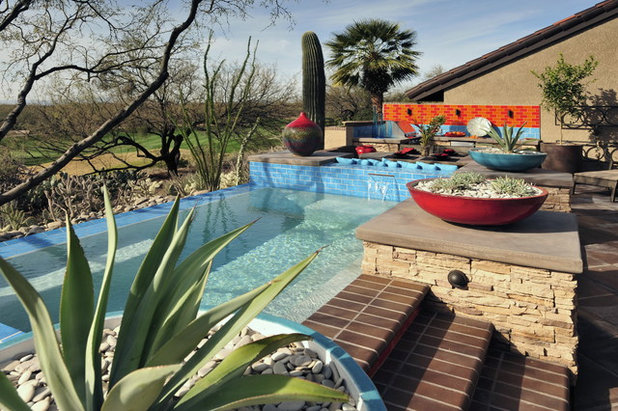
Modern aesthetics work too—bold circles of color showcase plants.

Native plants thrive in extremes and offer brilliant color. Xeriscape gardens with spaced specimens highlight each plant’s form. For a lush look, use colorful succulents, perennials, and grasses that tolerate heat and drought.


Design tip: Desert marigold, Mexican honeysuckle, native sunflowers, red‑hot poker, yellow bells, plus familiar favorites like cosmos, coneflowers, dahlias, salvias, verbena, bougainvillea, trumpet vine. Some roses also adapt.

If lawn is desired, use it as an accent, grouped with other high‑water plants near the house for shade. Consider artificial turf to save water and maintenance.

Evenings and mornings are pleasant. Courtyards—enclosed on four sides, deeply shaded, with edge plantings and a central fountain—are classic. Even a simple wall provides scale, security, and a microclimate for thirstier plants.

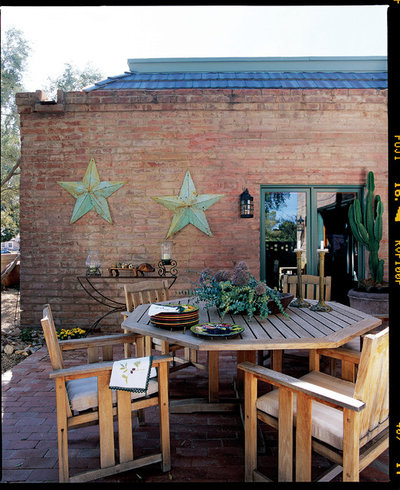


Pools, fountains, or recirculating features cool the air and delight the senses. Formal pools entertain; naturalistic ponds blend with the desert. High walls retain heat for cool mornings and shade afternoon sun.


Kiva‑style fireplaces, fire pits, shade sails, and trees near the house cool spaces. Terra‑cotta steps elevate a flagstone patio. Iron sculptures catch spectacular sunsets.


Pastels fade against intense skies. Embrace turquoise, chili‑pepper red, deep azure. Paint gates, overheads, or entire walls. Navajo blankets add pattern. Turquoise water, blue/orange walls, and bright pots enliven sand‑toned hardscapes.


Design Your Dream Landscape: Styles, Planning & Pro Tips
A Brief History of the Landscape Garden: From Capability Brown to Chelsea
Transform Your Yard with Landscape Design: Ideas from the Garden Center
Living Harmoniously at the Wild Edge: Design Tips for Nature-Forward Homes
Lay of the Landscape: Creating the Beauty of a Japanese Garden
Kid-Friendly Garden Tools and Safety Essentials for Family Gardening
The Art of Landscaping: Plan First, Plant Later
Designing with Annuals: Color, Texture, and Site-Smart Choices
Corrugated Metal in the Garden: Modern, Sustainable & Surprisingly Versatile
Concrete Garden Walls: Durable, Versatile Design Solutions
Formal Parterre Gardens: Timeless Elegance for Modern Yards
Sculpture in the Landscape: Art That Engages Nature and Space
Copyright © www.100flowers.win Botanic Garden All Rights Reserved