


Ground covers do more than suppress weeds—they unify plantings, soften hardscape, and add texture. With varieties for sun, shade, wet, and dry conditions, there's a ground cover for every niche. Just research growth habits to avoid accidental invasiveness, and contain vigorous spreaders away from lawns.
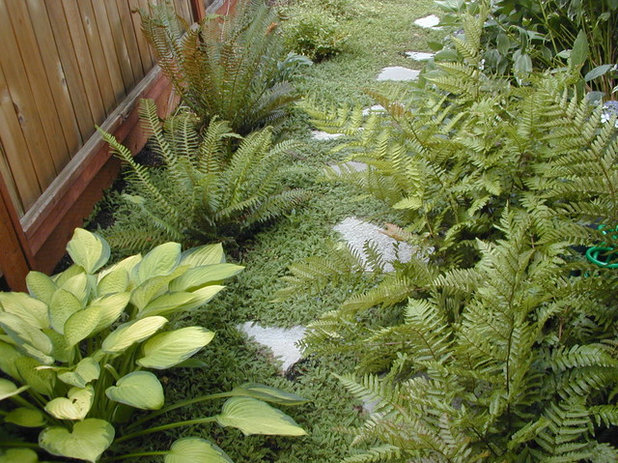
The classic use: ground covers fill joints between flagstone or modular pavers, creating a living mosaic. Choose foot-traffic-tolerant species like brass buttons (Leptinella squalida, zones 4–10), which forms a dense, evergreen, fern-like carpet.

Instead of shrubs at the base of a specimen tree, carpet the ground with a low cover to reveal the trunk's architecture. Irish moss (Sagina subulata, zones 4–8) forms intriguing mounds dotted with tiny summer flowers.

Arid, well-drained rock gardens suit specialized ground covers. Knawel cushion (Scleranthus biflorus, zones 9–11) slowly creeps over stones with a dense green mound. Ensure sharp drainage to prevent rot.

Bugleweed (Ajuga reptans, zones 3–10) thrives in the depleted, acidic soil under evergreens, forming a tight evergreen mat with spring flower spikes. Contain it—it can be aggressive.

Baby's tears (Soleirolia soleirolii, zones 9–11) flourishes with minimal soil, cascading over brick walls and steps, lending an aged, softened patina. It bridges hard lines and soft planting effortlessly.

At Sissinghurst Castle, a stone bench was carpeted with chamomile (Chamaemelum nobile), a medieval fragrant seat. Try Roman or English chamomile, or creeping thyme (Thymus serpyllum, zones 4–8) for a scented surprise underfoot.
Drain Cover Maintenance: Removable vs. Permanent
Reviving Drought-Stressed Groundcovers in Virginia: pH Testing, Fertilizing, and Spray Feeding
My Herb Garden Experiment: From Skepticism to Bountiful Success
Transform Your Home with Garden Plants: Beauty, Pride, and Healthy Activity
Water Gardening: From Simple Containers to Backyard Ecosystems
Ground Cover for a Tropical Courtyard in Guatemala
Best Ground Covers for Sun: Pachysandra vs. English Ivy — And Why Pachysandra Wins
Weed Management in Established Groundcovers: Pre-Emergents and Spot Treatment
Groundcovers for Flagstone Joints in Dallas
Replacing Pine Straw Mulch in North Carolina: Better Options
Copyright © www.100flowers.win Botanic Garden All Rights Reserved