


Landscaping budgets vanish quickly amid endless product marketing. But elegance and harmony come from materials that resonate with your site and region—not imported travertine that feels discordant. Centuries of world-class architecture offer lessons for material selection.
Small boulder walls and loose gravel—possibly site-sourced—create magic without sterile edging. Tree groves gain grandeur when planted off perfect centers; embrace the perfectly imperfect. For patios, pea gravel, ⅜-inch angular gravel, or decomposed granite work beautifully when sited thoughtfully—imagine cocktail parties in a garden-patio embrace.
Boulders don't rust or rot. A child's permanent marker art adds patina. A massive stone table rivals George Nakashima's work. Colorado designers' Zen gardens prove lifetime study yields exceptional places; beginners should hike creek beds—nature is the greatest classroom. An outdoor shower beside a boulder? Dream material.
Cut slabs—new or antique from quarries, suppliers, or salvage yards—install simply and let you experience the land's topography.
Antique granite or flagstone curbs (Pennsylvania's Harry Bambi Supplies is a treasure) excel when adding older materials to existing sites.
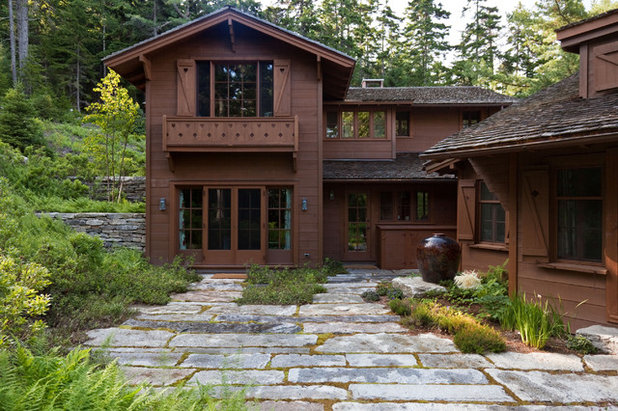
Irregular flagstone set in lush planting creates effortless harmony. Extending stone into guest parking encourages circulation and connects materials—what Dan Kiley called "slippage," an extension beyond implied boundaries.
2-by-3-foot pavers on a bond pattern install and expand easier than mosaics. Lower planes set into the landscape let gardens soften materials. Regionally salvaged granite with looser joints allows plantings between stones for rustic character. Full-color stone with thermal bluestone coping, stone columns with log beams—material conversations at their finest.
Sandstone walls with thermal bluestone counters and footrests complete an outdoor kitchen. Cedar pergola and hand-forged fixtures elevate evenings. Seal bluestone to resist grill grease.
Stamped concrete rarely satisfies, but poured sections as large, powerful pavers work. Stained benches and steps warm concrete. Wood finishes bring life to concrete, glass, and steel compositions. Bernard Trainor's concrete use impresses.
Polycarbonate panels screen with light transmission—unnatural, but artfully mixed with older vernacular in modernist hands.
Cor-Ten eliminates painting. Walls, bridges, treads—even civic spaces. Start material selection with walkways, then build from project future and desired experience. Walk your city with a camera—public spaces by talented designers inspire.




What Does a Landscape Design Cost? (NE Ohio, 150×50 ft Lot)
Landscape Design Fundamentals: Softscape, Hardscape, and the Five Elements
Budget Landscaping with Recycled Materials: Creative and Eco-Friendly
Landscape Design for Beginners: Core Principles and Practical Steps
6 Strategies for Harmonious Hardscape Integration
Plants That Attract Hummingbirds: Vines, Trees, Shrubs & Flowers
Landscape Design for a College Campus: Library-to-Stadium Corridor
Japanese Garden Gravel: Specifying the Right Material in the Midwest
Garden Design Software Reviews: Best Programs for Homeowners and Professionals
Landscaping a Storm Shelter Mound: Low-Maintenance Groundcovers for Arkansas
Buying Landscape Tools Online: Top Retailers & Savings Strategies
Landscape Lighting Design: Illuminating Your Outdoor Living Spaces
Copyright © www.100flowers.win Botanic Garden All Rights Reserved