


Home sites fall into two categories: those graced with mature shade trees, and those without. The difference is profound. No amount of design ingenuity compensates for the absence of trees—their pedigree, presence, and ecological generosity reveal nature's abundance even to the most disconnected among us.
Growing a tree is energy-free. Seeds cost nothing. Seedlings transplant easily when dormant. With care and attention to soil biology, saplings become giants within a lifetime. Yes, 40-foot trees have been helicoptered into place—extravagant, perhaps, but proof of how deeply we value them.
A recent consultation revealed a cautionary tale: a magnificent American beech woodland cleared of understory and replaced with turf grass. The owners cherished this area, yet the trees were declining. The culprit? Changed soil biology from turf, fertilizer, herbicides, and compaction from commercial mowers. This story repeats everywhere—"landscaping" often destroys the very nature it claims to celebrate.
James Rose's iconic home doesn't just embrace trees—it incorporates them. A custom outdoor fireplace among palms becomes romantic craftsmanship, not a modular kit in a blank yard. A driveway compressed by tree trunks creates a magical arrival sequence no paver pattern can replicate. A veranda framed by gnarly, clumped trees brings distant landscape into the foreground.
When construction threatened an apple tree and red maple, the team brought in an arborist to save a damaged branch. These living assets warrant surgical care. Decks built around trunks preserve them as garden sculptures. A swing hung from a mature tree reminds us: trees sequester carbon, cool air, fix nitrogen, produce oxygen, create biomass, and support habitats.
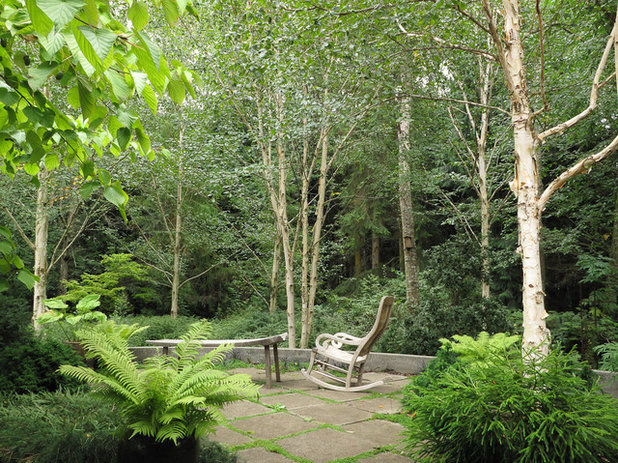
A gravel drive, curb, sidewalk, generous landing, and monkey grass (Liriope spicata, zones 4–10) ground plane achieve timeless elegance. The design feels complete because of mature trees. Woodland spaces offer experiences no lawn or daylily bed can match—powerful places worth developing as part of your habitat.
Uplighting trees draws the eye upward, stokes curiosity, and encourages movement outdoors. A lit landscape viewed from inside becomes an asset. In a majestic woodland, simple understory planting celebrates the canopy rather than competing with it.
Plant shade trees regardless of property size. Envision your landscape in 15 years with mature canopy. If you have large trees, consult soil biology and plant health experts. Balance is achievable, and living with an abundant landscape is invaluable.




Thinning a Jungle Backyard: Balancing Shade, Privacy, and Aesthetics
Ficus Trees Indoors: Selection, Care & the Sacred Fig Legacy
Specialty Trees: Rare Specimens and Holiday Showstoppers
The Stihl Chainsaw Legacy: 80 Years of Cutting Excellence
American Sycamore (Platanus occidentalis): Majestic Native Giant
Designing a Multi-Purpose Garden: Beauty, Function, and Outdoor Living
Energy-Efficient Landscaping: Regional Strategies to Cut Heating and Cooling Costs
Why Regular Tree Pruning Is Essential for Beauty and Safety
Shagbark Hickory: America's Historic Nut Tree and Its Many Uses
Historic Flowering Trees: From Bartram's Discoveries to Modern Landscapes
The Secret to Pruning Apple Trees: Train Early, Prune for Production
New Construction Landscaping: Save Money, Add Value, Avoid Regrets
Copyright © www.100flowers.win Botanic Garden All Rights Reserved