


Trees bring height, volume, and four‑season interest—flowers, foliage, bark, fruit—to any garden. But as spaces shrink, selecting the right tree becomes critical. Here’s how to pick, train, and even pot trees for small gardens.
Standard reference lists often reflect outdated “small garden” sizes. Focus on three factors: mature size, shape, and growth rate.

City trees support wildlife: nesting birds, pollinators, aphids and caterpillars that feed birds. Hawthorns (Crataegus spp.) and rowans (Sorbus spp.) offer autumn berries for food and color. Cultivars like Sorbus ‘Joseph Rock’, S. sargentiana, and Crataegus laevigata ‘Pauls Scarlet’ fit small spaces while delivering ecological value.


Pruning and training expand your palette. The Greeks and Romans clipped evergreens—topiary’s origin. In small gardens, topiary uses small‑leaved evergreens like privet honeysuckle (Lonicera pileata) in containers.

Removing lower branches creates headroom under a canopy with minimal harm—if cuts are small and few per session. Designers use this with multiple trees, e.g., Photinia × fraseri ‘Red Robin’.
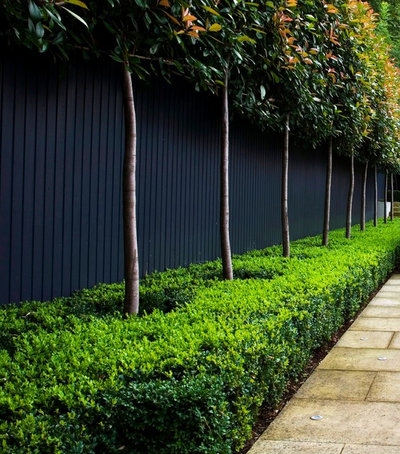

Branches of a row of trees are tied and clipped to form a flat plane above bare trunks (“stilts”). Similar to espalier but trees connect. High maintenance, but available pre‑trained. Creates privacy, wind/sound blocks, and wildlife habitat in narrow spaces. Common species: linden (Tilia × europaea), beech (Fagus sylvatica), hornbeam (Carpinus betulus), fruit trees. Evergreen oak (Quercus ilex) also works. Pleached apples give blossom, fruit, and under‑planting space.


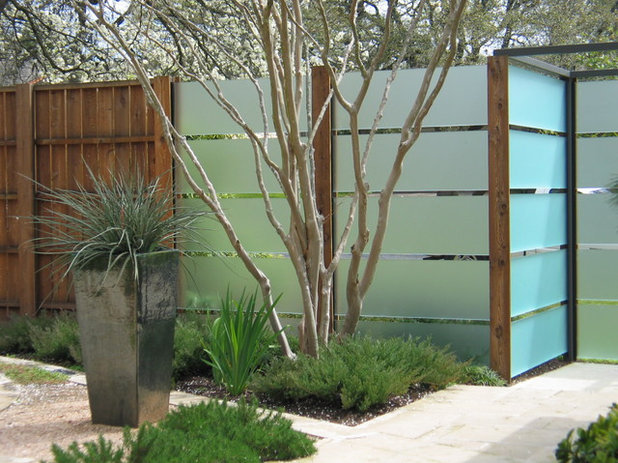
Multi‑stems blend tree and shrub traits: they fill space yet feel open, offer larger foliage mass, and often show beautiful bark. Silver birch (Betula sp.) is a favorite; paper‑bark maple (Acer griseum), snowy mespilus (Amelanchier lamarkii), Japanese angelica tree (Aralia elata ‘Variegata’) also work.
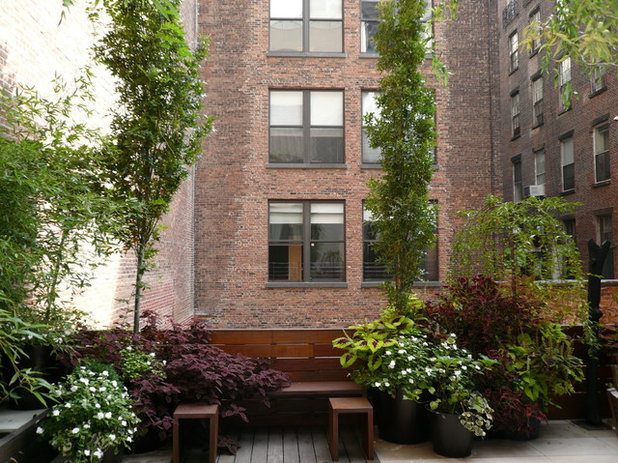
Containers let you grow trees unsuited to your soil or climate, and rearrange like furniture. They need regular watering, feeding, and repotting every few years to prevent root‑binding. Some thrive long‑term; others are temporary.

Future garden design may treat small‑space trees as living sculpture. Whatever the trend, trees remain essential.
Shown: Japanese maple (Acer palmatum)
More: 5 Best‑Behaved Trees to Grace a Patio
Narrow Trees for Tight Garden Spaces
More tree suggestions in the Houzz Garden Section
Thatching Ants at Base of Large Fir Tree: No Threat to Tree Stability
Moving & Overwintering Perennials, Shrubs & Trees in Minnesota: A Complete Guide
Designing Courtyards Around Existing Trees: How Much Space Does a 20m Canopy Need?
Vinegar and Salt Near Tree Roots: Risks and Ant Ecology
Walnut Tree Mulch and Nut Allergy Risks
Protecting Young Japanese Maple and Citrus in Alabama Winters
Landscape-Wide Tree Decline: Carpenter Ants Are Symptoms, Not Causes
Tree vs. Bush: Is There a Technical Difference?
Planting Eucalyptus Near Citrus and Apple Trees: Competition Risks
Grass Under Walnut Trees: Juglone, pH, and the Compost Solution
Olive Tree Care: Growing for Fruit, Oil & Landscape Beauty
Trees for Spectacular Fall Color: Science, Selection, and Planting
The Weepers and the Creepers: 10 Intriguing Trees for a Garden with Character
Copyright © www.100flowers.win Botanic Garden All Rights Reserved