


Rethinking your lawn? These six Houzz-featured yards from 2014 offer ideas and inspiration. Each homeowner replaced grass with something better suited to their needs—from a sidewalk farm to a restored natural shoreline welcoming wildlife, to enhanced outdoor living areas.
That narrow strip between sidewalk and curb—often poor soil, limited water, and city-regulated—can be a "hell strip." Some maintain it like the rest of the yard; others let it go.
BEFORE: Tom Richardson's 1,000-square-foot Seattle parking strip was lush lawn. An urban gardener across from a park, he wanted to expand crops and create an accessible spot for walkers.

AFTER: Designer Erin Lau replaced lawn with six custom juniper raised beds, pollinator beds, and a stone birdbath. Bed size/placement follows regulations; extra-wide seats offer rest stops. Richardson grows tomatoes to carrots, enjoying nightly fresh salads and frequent conversations about edible gardening.

Windi Heaton's Marin County waterfront property abuts a lagoon across from a bird sanctuary.
BEFORE: Expansive lawn and weathered deck required heavy water and chemicals—a wildlife desert. No path from deck to water, no seating beyond the deck.

AFTER: Designer Eileen Kelly mixed California natives and drought-tolerant plants in burgundy, orange, yellow. A paver path eases movement; multiple seating areas invite lingering. Eliminating lawn minimized maintenance, reduced water use, and welcomed birds and bees back.

Another waterfront lawn, this time on Lake Washington near Seattle.
BEFORE: Lawn and concrete bulkhead didn't reflect the original coastline or allow advantage of the nearly 1-acre site. Owners wanted a landscape blending with the natural setting.

AFTER: Designer Paul Broadhurst took owners kayaking to Yellow Island Preserve to envision the lush natural landscape. He added a pool, abundant local native plants, and restored the shoreline with pebbles, boulders, and downed timber—welcoming wildlife and drawing the family to the water. Featured as a pilot program in a WA/BC shoreline restoration initiative.

Designer Chris McCullough and architect Peggy Hsu remodeled a 1920s Spanish bungalow in LA.
BEFORE: Backyard lawn was fading; front grass still strong. Space needed year-round outdoor living with minimal water.

AFTER: Mature yuccas frame a platform deck and dining area. Gravel, decomposed granite, and flagstone cover ground; drought-tolerant lavender and Jerusalem sage frame the space. Minimal watering, low maintenance, enhanced Mediterranean influence. String lights and reclaimed-wood wall complete the outdoor room.

Londoners wanted more than lawn removal—they wanted a story.
BEFORE: Long, narrow terraced garden had no progression. Inspired by Gaudí's Güell Pavilions in Barcelona, they brought the myth of his wrought iron dragon gate to London.

AFTER: Serpentine path winds through grasses, flowers, foliage, and a spiral seating area to garden corners. Mature trees, turf mounds, and celestial art draw visitors in. Night lighting and a fire pit create a mythical space.

A soggy Seattle backyard in Mt. Baker.
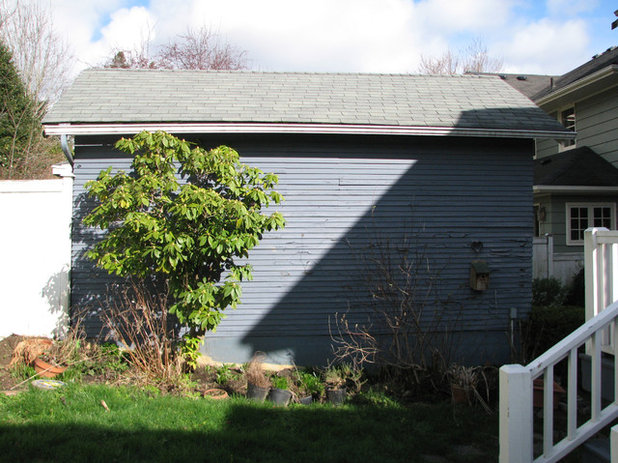
BEFORE: Difficult alley-to-back-door passage, nearly impossible with groceries. Owners wanted architect Tyler Engle to smooth the car-to-house journey and build an outdoor room bringing inside life out.
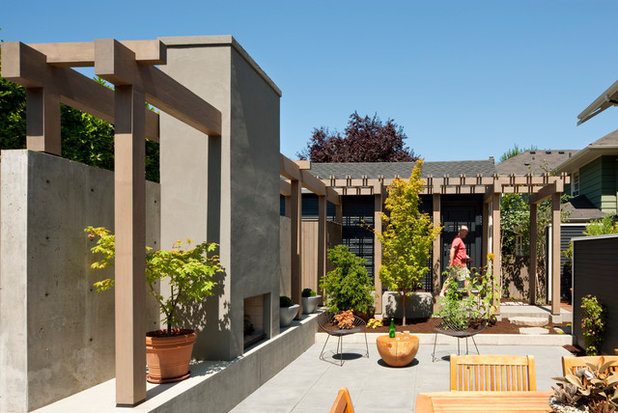
AFTER: Concrete patio framed by concrete wall and wood trellis. Integrated fireplace warms the intimate space for concerts, dinner parties, fireside chats—used spring through fall. New concrete path eases the car-to-backyard journey.
Front Landscape Design Critique: Georgia Zone 7
Why Roses Drop Lower Leaves in Fall
Weed Control in Mixed Lawn: Define Your Grass First
Recovering from Moles, Weeds, and Overseeding Issues
Lawn and Landscape Therapist: Professional Services Across California Communities
Smart Watering Strategies for a Healthy Lawn and Landscape
Comparing Lawn Alternatives: Water Use, Loungeability, Environmental Impact, and Upkeep
Organic St. Augustine (Floratam) Management in Florida: Soil Health Over Chemicals
Centipede Lawn Bare Spots: Fungus, Not Reseeding, Is the Problem
Why Warm-Season Grass Turns Yellow in Cold Weather: No Iron Needed
Brown Patch in a Young North Carolina Lawn: Cultural Management Over Fungicides
Organic St. Augustine Lawn Care in Florida: Sugar, Baking Soda, and Natural Pest Control
Sod Webworm Identification and Management
Low-Maintenance Landscaping: Ditch the Lawn for Easy-Care Beauty
Copyright © www.100flowers.win Botanic Garden All Rights Reserved