


You've approved your landscape architect's final site plan—now it's time to build. You can pay the architect to select a contractor, or hire one yourself. Landscape contractors vary in skill and experience, but a great job doesn't require an award-winning portfolio. What matters is delivering on budget, on time, with reliable service and quality installation.

You can engage your landscape architect for construction administration—the industry term for managing the administrative tasks of getting installation underway. The architect obtains estimates or bids and recommends the best company, often drawing on established local relationships.
Once you sign with the contractor, the architect and builder collaborate to ensure the work matches the approved design. This creates a triangular relationship: you have separate contracts with the architect (design + construction administration) and contractor (installation). No direct contract exists between architect and contractor, and the architect doesn't supervise the contractor. However, the contractor's agreement should specify building according to the architect's drawings and specifications.
This eliminates the triangular relationship and works well if you're construction-savvy or your project is straightforward. For simple work, hiring directly makes sense. If you have detailed design drawings, you own them and can use them for estimates—typically stated in the design services contract.
The downside: without the architect's design input during construction, you'll make substitution decisions alone when issues arise (e.g., unavailable stone). This is fine for experienced homeowners but overwhelming for others.
A third option—landscape design-build firms combining design and installation—will be covered separately.

Broad internet searches often yield poor results. Focus locally with these resources:

You need a knowledgeable, reliable contractor who delivers quality work on schedule. Request this checklist:

Construction disrupts the site—minimize impact with sustainable materials and methods. Some contractors have long used these practices; others are newer to the concept. Discuss sustainability early to gauge their knowledge:

Larger companies assign project managers and crew teams; smaller firms often have one owner-manager as main contact. Know your point people for issue resolution. The site supervisor leads daily crews and is your onsite contact. If you hired an architect for construction administration, they'll check in with the supervisor.
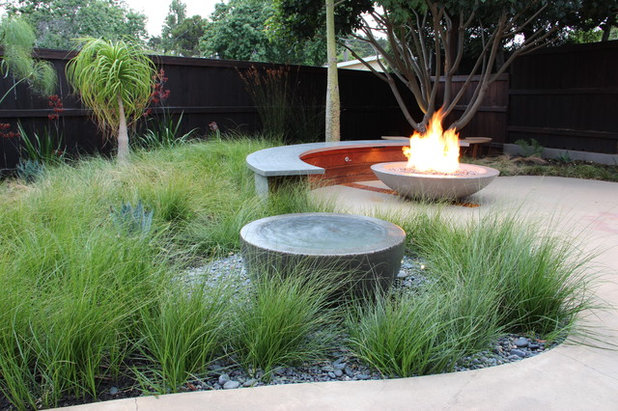
Contractors rely on specialists for custom work. Know who handles specialty work—irrigation (may require specific license), pools, ponds, stone/metal/concrete work, sculpture, mosaics, ornate fabrications. Ask for subcontractor qualifications using similar vetting questions.

Two pricing methods exist: estimates (detailed line items) and bids (fixed price). Use a bid if you have a strict budget ceiling. Estimates are easier to compare across companies. The landscape architect's site plan helps contractors provide precise estimates.
Estimates include materials, labor, delivery, waste disposal, project management (often in labor), and all build requirements. Contractor plant/material costs are below retail (wholesale purchasing). Compare detailed line-item estimates from several companies.

The choice is ultimately yours—you can override the architect's recommendation, though this requires early architect-contractor trust-building. Base your decision on the best combination of qualifications, experience, and cost. The cheapest isn't always best, nor the most experienced.
Meet potential contractors in person—they'll want to walk your property before estimating anyway. Use this to assess professionalism and reliability. If vetting independently, request a site visit and short meeting. Background checks can be done online and by phone.
Once selected, sign a contract outlining scope of work, plant warranty, and project completion schedule.
Tree Trimming Techniques: Thinning, Windowing, Skirting, and Crown Reduction
Finding a Quality Landscape Contractor: Evaluation Checklist
Low-Maintenance Front Yard Landscaping: Grass Alternatives and Irrigation
Front Yard Landscaping Ideas: Beauty Without the Budget
Roses in the Landscape: Choosing the Right Type for Every Garden Role
Smart Garden Landscaping: Plan, Design, and Maintain Your Outdoor Space Like a Pro
Front Yard Landscaping: Step-by-Step Design and Installation
Growing Blueberries: Soil Prep, Pruning, and Variety Selection for Decades of Berries
How to Become a Landscape Architect: Education, Skills & Career Path
How to Install Wooden Landscape Edging for Clean Garden Beds
How to Maintain a Landscape Pond: Seasonal Care Guide
Parasitic Wasps: Garden Heroes—Identification & Life Cycle
Copyright © www.100flowers.win Botanic Garden All Rights Reserved