


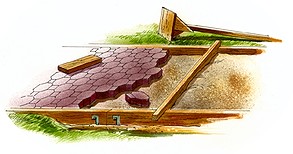
All you need for a paver walkway is a firm, smooth sand base and some sweat equity. Held by sturdy edging, pavers offer many virtues of concrete with easier installation. Path width: at least 3 ft. Keep 2 ft away from trees, large bushes, hedges. Choose a layout that minimizes cutting.
1. Build the base. Excavate 6 in. deep. Install 2x4 edging, miter joints, stake every 4 ft. Level across walkway. Tamp soil, remove roots ≥½ in. Add steps if slope >10%.
2. Form the bed. Lay weed barrier. Make a screed from 2x6 notched to paver thickness. Add sand for 2-in. layer. Screed level. Moisten and tamp until well-packed and smooth.
3. Set the pavers. Cut blocks by scoring then splitting with baby sledge and brickset. Use framing square to true courses every few feet. Spread sand on walkway, sweep excess, moisten. Repeat until joints are filled.
Choosing the Right Base Material for a Paver Patio in Arizona
Proper Sand Bed Preparation for Paver Patios: Screeding vs. Compacting
Loose-Laid Paver Patio: Base & Sand Material Advice
Reattaching Bluestone to Concrete Walkway: Clean, Acid Etch, New Mortar Bed
Concrete Walkway Joint Placement Guide
Pavers Over Stamped Concrete: Why Sand-Set Fails and How to Bond Properly
Steep Paver Path on the Oregon Coast: Why Sand Fails & Better Alternatives
Installing Concrete Pavers Over an Existing Gravel Driveway
Installing Flagstone Over an Existing Paver Patio with Drainage Issues
Paver Sand Guide: Concrete Sand Base, Masonry Sand or Polymeric Joint Sand
Repairing Sunken Pavers in a Driveway: Base Preparation and Joint Sand
Mixing Flagstone Walkways with Paver Patios: Design Tips
Paver Walkway Base on a Slope: Gravel Selection for Oregon Coast Rain
How to Lay a Stone Walkway: Step-by-Step Guide for Durable Pathways
Copyright © www.100flowers.win Botanic Garden All Rights Reserved