Tree root removal is sometimes necessary—for construction, hardscape repair, or after tree removal. The method chosen depends on root size, location, budget, and whether the tree remains. Done incorrectly, it can kill the tree or create persistent regrowth problems.
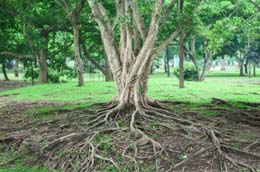
When Root Removal Is Needed
- Living tree: Roots damaging hardscape, utilities, foundations
- Removed tree: Stump and roots remain; sprouting; in way of new work
- Pre-construction: Clear footprint for foundation, driveway, pool
Assessment First
- Tree status: Keep or remove? (Dictates method aggressiveness)
- Root size/location: Expose with air spade or hand digging
- Structural roots: >4" diameter; critical for stability—avoid cutting
- Species tolerance: Some tolerate root loss (oak, elm); others don't (pine, magnolia)
- Season: Dormant season (late fall-winter) best for live trees
Removal Methods
1. Hand Digging & Cutting (Small Roots, Live Trees)
- Tools: Sharp spade, root saw, lopper, pruning saw, mattock
- Process: Excavate around root; clean cut with saw; backfill immediately
- Limit: Roots <2-3" diameter; non-structural
- Aftercare: Water deeply; mulch; monitor for stress
2. Stump Grinder (Stumps & Surface Roots)
- Equipment: Walk-behind (6-12" capacity) or self-propelled (12-24")
- Process: Grind stump 6-12" below grade; chase major surface roots
- Output: Wood chips (mulch or remove); hole backfilled with soil
- Cost: $100-400 rental/day; $150-500+ professional per stump
- Limit: Can't reach deep roots; utility conflicts
3. Mini-Excavator/Backhoe (Large Roots, Tree Removed)
- Process: Excavate around root mass; lift/break; load out
- Best for: Complete root ball removal; construction prep
- Impact: Major soil disturbance; compaction risk
- Cleanup: Significant wood debris; soil replacement needed
4. Chemical Acceleration (Stumps, No Rush)
- Products: Potassium nitrate (stump remover); glyphosate (fresh cuts)
- Process: Drill holes; fill; wait 4-12 weeks; then remove/grind
- Pros: Low effort; cheap; no equipment
- Cons: Slow; chemical handling; variable results
5. Burning (Rural, Permitted, Stumps Only)
- Process: Drill holes; add accelerant (kerosene, commercial); ignite; monitor
- Risks: Fire spread; air quality; underground smoldering; often illegal
- Not recommended: Liability; environmental; incomplete
6. Air Spade + Selective Pruning (Live Trees, Precision)
- Tool: Compressed air excavates soil without root damage
- Process: Expose roots; assess; clean-cut problem roots; backfill
- Best for: High-value trees; structural root preservation
- Cost: Professional service ($200-500/hr); worth it for specimen trees
Root Pruning Guidelines for Live Trees
- Distance rule: Measure trunk diameter (inches) at 4.5'; multiply by 1.5 = minimum feet from trunk to cut (e.g., 12" tree → 18' minimum)
- Better rule: Stay outside Critical Root Zone (CRZ) = 1' radius per 1" DBH
- Maximum loss: <20% root system per event; <30% per year
- Clean cuts: Sharp tools; no tearing; backfill within 1 hour
- Post-care: Deep watering; 3-4" mulch; anti-desiccant if summer
Stump Grinding Specifications
- Depth: 6-8" (grass); 12-18" (replanting); 24"+ (construction)
- Lateral: Chase major roots 3-5' from stump
- Debris: Remove chips for replanting; leave for turf
- Soil: Replace with topsoil/compost mix for planting
Safety & Regulations
- Utilities: Call 811 before ANY digging
- PPE: Eye, ear, foot, hand, head protection
- Stability: Tree may become unstable after root cutting—assess
- Permits: Some municipalities require permits for root pruning
- Arborist consultation: Required for large/mature/high-value trees
Reference from Source
The original article described: hand digging (shovel, root saw, grub hoe, lopper), stump grinder (6-12" stumps), backhoe (deep roots), fire (few roots), chemicals (accelerate rotting), and a calculation method: trunk diameter (feet) × 12 + diameter + 1.5 = inches from root to protect tree.
Root removal is surgery. The patient (tree or site) deserves proper diagnosis, the right tools, and skilled hands. When in doubt—especially with live trees—hire a certified arborist. The cost of expertise is far less than the cost of a fallen tree or a dead specimen.


