


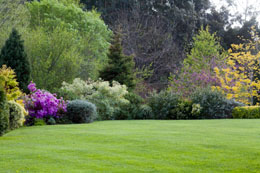
Shrubs (bushes) are the workhorses of landscape design—providing structure, screening, seasonal interest, and wildlife habitat at human scale. With hundreds of species and cultivars available, choosing the right bushes transforms a planting from a collection into a composition.
| Shrub | Size (H×W) | Zones | Key Features |
|---|---|---|---|
| Boxwood (Buxus) | 2-15' × 2-15' | 5-9 | Dense, shearable; 'Green Velvet', 'Winter Gem' |
| Inkberry (Ilex glabra) | 5-8' × 5-8' | 4-9 | Native; wet-tolerant; 'Shamrock', 'Gem Box' |
| Yew (Taxus) | 4-20' × 4-15' | 4-7 | Shade-tolerant; shearable; toxic to deer |
| Distylium | 3-10' × 4-8' | 7-9 | Heat-tolerant; blue-green; 'Vintage Jade', 'Cinnamon Girl' |
| Mahonia | 3-10' × 3-8' | 5-9 | Spiny foliage; yellow flowers; blue berries |
| Pieris | 4-10' × 3-8' | 5-8 | Lily-of-valley flowers; red new growth |
| Rhododendron | 4-15' × 4-15' | 4-8 | Spring flowers; acid soil; shade |
| Shrub | Size (H×W) | Zones | Key Features |
|---|---|---|---|
| Hydrangea | 3-8' × 3-8' | 3-9 | Macrophylla, paniculata, quercifolia, arborescens |
| Viburnum | 6-15' × 6-12' | 2-8 | Fragrant flowers; berries; fall color; native spp. |
| Lilac (Syringa) | 8-15' × 6-12' | 3-7 | Fragrant spring flowers; 'Miss Kim', 'Bloomerang' |
| Spirea | 2-6' × 2-6' | 3-8 | White/pink flowers; gold foliage cvs.; tough |
| Weigela | 4-8' × 4-6' | 4-8 | Tubular flowers; hummingbirds; variegated cvs. |
| Ninebark (Physocarpus) | 5-10' × 5-8' | 2-7 | Peeling bark; white flowers; purple/gold foliage |
| Fothergilla | 3-6' × 3-5' | 4-8 | Bottlebrush flowers; spectacular fall color |
| Clethra | 4-8' × 4-6' | 3-9 | Fragrant summer spikes; shade; wet-tolerant |
The original article listed numerous specific cultivars including: Adam's Needle, Alpine Currant, Arborvitae, Barberry 'Concorde', Bearberry 'Massachusetts', Beauty Bush 'Dream Catcher', Berberis 'Atro Nana', Burning Bushes, Butterfly Bush 'Miss Ruby', Compacta Burning Bushes, Coral Berry 'Magic Berry', Cotoneaster 'Cranberry', Deutzia 'Chardonnay Pearls', Dogwood 'Arctic Fire', Double Flowering Plum, Dwarf Burning Bushes, Elderberry 'Black Beauty', Euonymus 'Blondy', Evergreen Hedges, Flame Amur Maple, Flowering Quince 'Texas Scarlet', Forsythia 'Fiesta', Holly 'Blue Princess', Hydrangea 'Annabelle', Lilac Bushes, Potentilla 'Gold', Privet Bushes, Pussy Willow, Red Twigged Dogwood, Rose of Sharon, Spice Bushes, Spirea Bushes, Weigela Bushes.
Shrubs give a garden its bones, its seasons, its life. Choose for the site, design for the long view, and maintain with understanding. A well-chosen shrub palette matures into a landscape that feels inevitable—like it grew there on its own.
Concrete Landscaping: Modern Applications for Patios, Walls, and Creative Elements
Backyard Landscaping Ideas: Evergreens, Hardscape, and Year-Round Structure
Professional Tree Trimming Saws: Types, Applications, and Safety Essentials
Common Bushes Used in Landscaping: Selection Guide for Structure & Beauty
Decoding Nursery Pot Sizes: A Guide to Common Container Classes
Arizona Landscaping Guide: Thriving Gardens in Desert, Mountain, and Plateau Climates
Backyard Landscaping: DIY vs. Professional, Planning Resources, and Sanctuary Creation
Essential Gardening Equipment: Expert Reviews and Selection Guide
Chicago Native Plant Landscaping: Low-Maintenance Solutions for Midwest Gardens
Home Landscaping Basics: DIY Design, Safety, and Regulations
Desert Landscaping: Drought-Tolerant Plants for Arid Climates
Designing a Charming Country-Style Garden for Small Spaces
Yard Landscaping Essentials: Drainage, Rain & Snow Management
Copyright © www.100flowers.win Botanic Garden All Rights Reserved