Water features add a dimension no other landscape element can: sound, movement, reflection, and an immediate connection to natural systems. From a tabletop fountain to a naturalistic pond, water elevates any outdoor space into a sensory retreat.
Why Water Works
- Sound masking: Masks traffic, neighbors, mechanical noise
- Psychological restoration: Proven stress reduction, attention recovery
- Wildlife magnet: Birds, butterflies, dragonflies, amphibians
- Microclimate: Cooling evaporation, humidity for nearby plants
- Light play: Reflections, sparkle, night lighting effects
Types of Water Features
Fountains: Versatile & Contained
- Wall fountains: Space-efficient; formal or rustic; recirculating
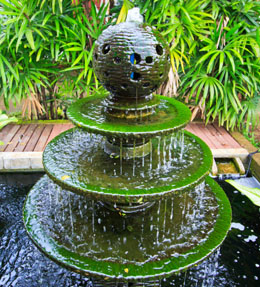
- Freestanding/pedestal: Classical, modern, sculptural; placement flexibility
- Tabletop: Small scale; entry, patio, indoor-outdoor transition
- Disappearing/basin: Water vanishes into hidden reservoir—safe, low maintenance
- Bubbling urns/boulders: Subtle sound; naturalistic; minimal splash
Waterfalls & Streams: Dynamic Movement
- Pondless waterfall: Waterfall → stream → hidden basin; no open water
- Stream with pools: Meandering, variable width, natural stone
- Formal cascade: Geometric spillways, architectural materials
- Rain curtain: Sheet of water falling through air; dramatic, modern
Key: pump sizing for desired flow/sound; proper filtration; access for maintenance.
Ponds & Water Gardens: Living Ecosystems
- Naturalistic pond: Irregular shape, shelves for marginals, beach entry
- Formal pool: Geometric, raised coping, architectural
- Koi pond: Deep (4'+), high filtration, predator protection
- Wildlife pond: Shallow slopes, native plants, no fish
- Container water garden: Half-barrel, glazed pot, stock tank—mini ecosystem
Specialty Features
- Rain chains: Decorative downspout alternatives; kinetic sculpture
- Reflecting pool: Still water, mirror sky/architecture; minimal planting
- Bog garden: Saturated soil for carnivorous plants, orchids, iris
- Hot spring/spa: Therapeutic; integrates with pool/landscape
Design Integration
Siting Principles
- View from inside: Frame from kitchen, living room, primary windows
- Sound travel: Position for patio/bedroom benefit; avoid neighbor nuisance
- Sun exposure: 4-6 hours for water lilies; shade reduces algae
- Utilities: Electric for pump/lighting; water supply for top-off
- Safety: Barriers for deep water; GFCI protection; child considerations
Plant Partnerships
- Marginals: Iris, pickerel rush, arrowhead, cattail (edges)
- Floaters: Water lilies, lotus, water hyacinth (surface coverage)
- Submerged: Anacharis, hornwort (oxygenators)
- Bog plants: Pitcher plants, sundews, marsh marigold
- Surroundings: Ferns, hostas, astilbe, Japanese maples (moisture lovers)
Lighting for Night Magic
- Submersible LEDs in basins/ponds (color-changing options)
- Uplighting on waterfall rocks
- Path lighting along stream edges
- Fountain illumination (internal or external)
Practical Considerations
Maintenance Reality
- Weekly: Skim debris, check pump, top off water
- Monthly: Clean filter, check water quality
- Seasonal: Spring startup, fall shutdown (cold climates), plant division
- Algae management: UV clarifier, beneficial bacteria, plant balance, shade
Budget Ranges
- Tabletop fountain: $50-300
- Bubbling rock/urn kit: $300-1,500
- Pondless waterfall: $3,000-10,000+
- Naturalistic pond (10×15'): $8,000-25,000+
- Koi pond: $15,000-50,000+
Start Small, Dream Big
A single bubbling basalt column on a patio brings water's magic for $500 and a weekend. A pondless waterfall transforms a slope. A naturalistic pond creates a backyard ecosystem. Water features scale to space, budget, and ambition—but even the smallest adds a dimension of life that plants alone cannot.


