


Whether you're shaping formal boxwoods or taming overgrown privacy hedges, the right hedge trimmer makes the job faster, cleaner, and less tiring. This roundup covers the main types—stand-alone and tractor-mounted—and reviews four popular models across gas, electric, and battery platforms.
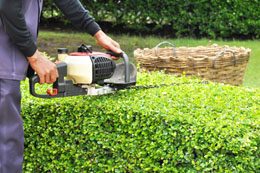
The most common category for homeowners. Available in three power formats:
Most powered stand-alone models feature dual-action blades (both blades reciprocate) for smoother cuts and less vibration. Safety interlocks require two-handed operation to prevent accidental starts.
Designed for agricultural and large-scale landscaping—vineyards, orchards, highway maintenance. Mounted on compact tractors, they use rotating blades on fixed or articulated arms. Not practical for residential use.
Specs: 24″ or 30″ double-sided blade | 0.7 kW engine | 5.2–5.4 kg | Rear swivel handle
Verdict: Excellent balance, low vibration, and precise control make this a favorite for shaping and sculpting. Starts reliably on the first or second pull (occasional cold-start hesitation noted). Best for serious homeowners and pros who value ergonomics and cut quality.
Specs: 22″ blade | 18V NiCd battery | ~25 min runtime | Optional extra batteries
Verdict: Lightweight, quiet, and convenient for light-duty trimming (branches ≤ ½″). Users love the cordless freedom but criticize short battery life and lower power vs. corded/gas models. Good for small, well-maintained hedges; struggles with thick, woody growth.
Specs: Double-reciprocating blades | 21.2 cc engine | Professional-grade build
Verdict: Smooth, jerk-free cutting with exceptional durability. Blades cut on both strokes for a clean finish. A workhorse for heavy daily use; overkill for casual homeowners but unmatched for longevity and performance.
Specs: Single-sided blade | 550W motor | Lightweight | Corded
Verdict: Well-engineered with strong cutting action up to ½″ branches. Single blade means slightly more vibration than dual-action models. Cord management required. Solid value for noise-sensitive areas with reliable power access.
| Need | Best Choice |
|---|---|
| Small hedge, quiet neighborhood | Corded electric or battery |
| Medium hedge, no outlet nearby | Battery (with spare) or gas |
| Large, dense, woody hedges | Gas-powered (pro grade if frequent) |
| Occasional shaping only | Manual or lightweight electric |
Match the tool to your hedge size, density, and usage frequency—and always wear eye protection, gloves, and sturdy footwear.
String Trimmer Choice: Straight Shaft Shindaiwa for Durability
Telescopic Hedge Trimmers: Reach High & Deep Branches Safely Without a Ladder
Petrol Hedge Trimmers: Power for Large Properties & Heavy Growth
Long-Reach Hedge Trimmers & Power Options: Which Is Right for You?
Why Bosch Hedge Trimmers Are Worth the Investment
Choosing the Best Cordless Hedge Trimmer: Complete Buyer's Guide
Planting a Pyramidal Cedar Hedge in a Retaining Wall: Soil Mix, Spacing, and Watering
Mixed Hedge Design for 100 Feet of Privacy in Chicago
Restringing a Bump-Feed String Trimmer: Finding the Right Manual
Does Trimming a Hedge Make Your House Look Bigger?
Hard Pruning a 30-Year Boxwood Hedge: Timing and Risks
Choosing a Drought-Tolerant Boxwood Hedge for Hot, Dry Climates
Copyright © www.100flowers.win Botanic Garden All Rights Reserved