


This 8-step process takes you from "I want a flower garden" to a finished planting plan. "Border" = ornamental planting with defined edges and backdrop (house, hedge, wall, fence). Mixed borders (annuals, perennials, bulbs, shrubs, small trees) offer longest season. No single "right" way—your taste matters most.
What do you want? Small front-step annuals or sweeping perennial border? Peak season: brief spectacular show or spring-to-frost interest? Time, energy, budget: afternoon project or weekend+ ongoing care?
Walk your property. Ask:
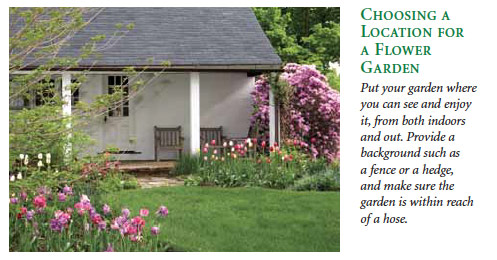
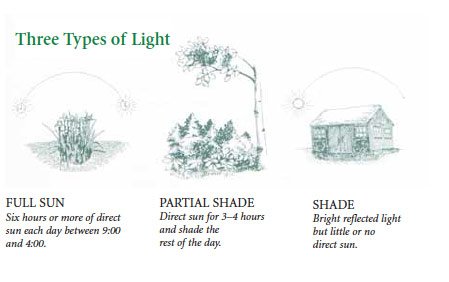
Match landscape scale. Start small (4' minimum depth)—expands over years. 2' strips allow only single rows. 4'+ allows height variation and seasonal interest. Straight edges = formal; curves = informal/natural. Mix shapes: straight near architecture, curves along property lines.
Visualize with string/stakes (straight) or garden hose (curves). Adjust. Spray-paint lines. Measure dimensions; note irregular curves. Mark existing features (shrubs, boulders) and nearby shade trees/structures affecting light.
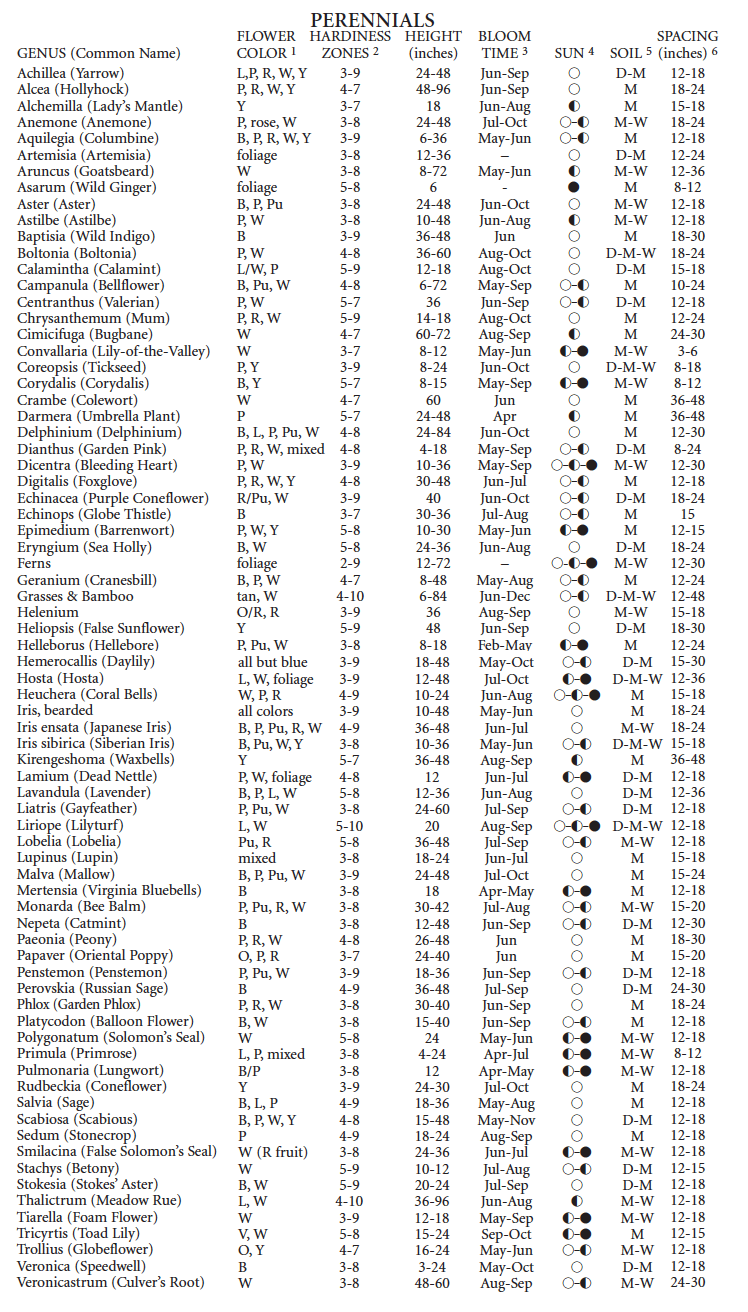
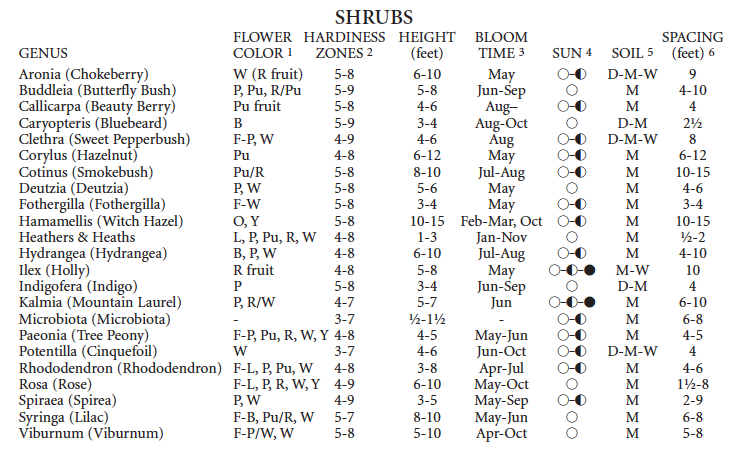
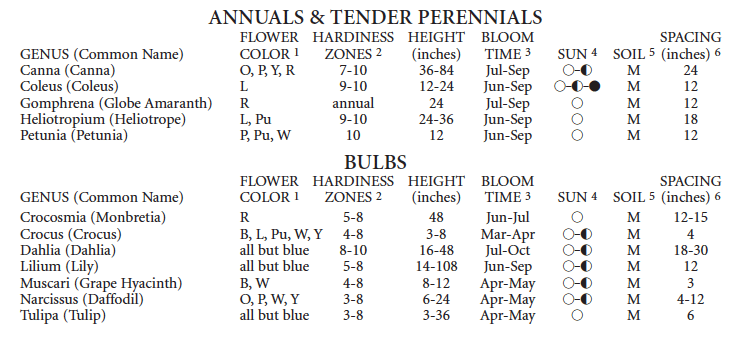
Override concern: "Will it grow for me?" Talk gardeners, read books, consult catalogs. End-of-article chart lists plants with sun/soil needs, color, height, bloom time. Shade plant list included. Most available spring/fall from White Flower Farm.
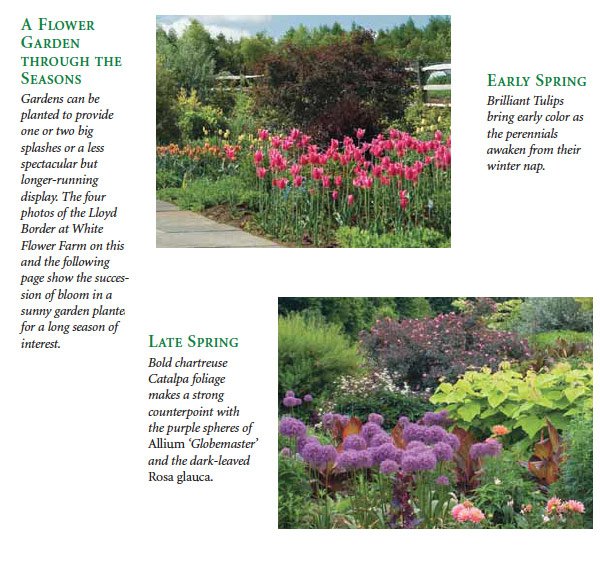
Most plants bloom briefly. Options: one big crescendo or long-running show. Depends on when you view the garden.
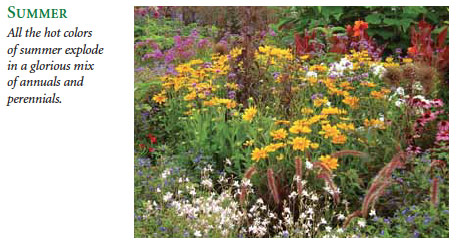
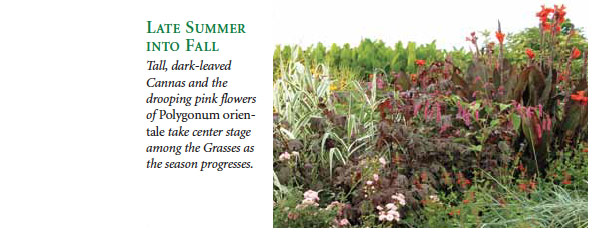
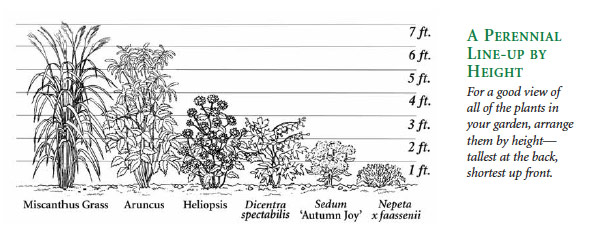
Contrast flower/leaf shapes and silhouettes. Daisy-only borders are charming but add lily trumpets, liatris spikes, achillea flat-tops, gypsophila clouds—composition sings.
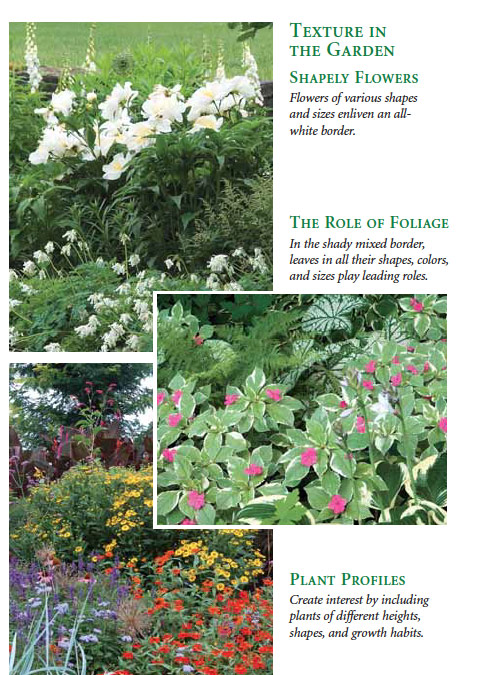
Leaf diversity: sword-shaped (siberian iris) behind fine needles (coreopsis 'Moonbeam'); lance-shaped (physostegia) against grass backdrop; ferny achillea vs. huge crambe leaves. Shade: broad asarum vs. heart-shaped lamium; fern fronds vs. shield hostas; bold convallaria vs. delicate corydalis.
Silhouettes: mounds (geraniums, nepeta, peonies, hostas), fountains (grasses), vases (phlox, buddleia, tall asters), mats (dianthus, lamium), spikes (delphiniums, alceas).
Supplies: graph paper (¼" squares), straightedge, sharp pencils, eraser. Optional: tracing paper, colored pencils, compass/template.
Scale: Fit border on one sheet. 44 squares across 11" paper. 20' border = 2 squares/foot (40 squares). Adjust scale for size.
Outline: Plot measurements, connect dots. Mark N/E/W/S, landmarks (trees, shrubs, rocks, fences as circles/arcs).
Fill In: Tracing paper over outline. Shrubs = circles; drifts = irregular blobs. Note: name, flower color, bloom time, height. Color with pencils. Separate tracing sheets per month/season.
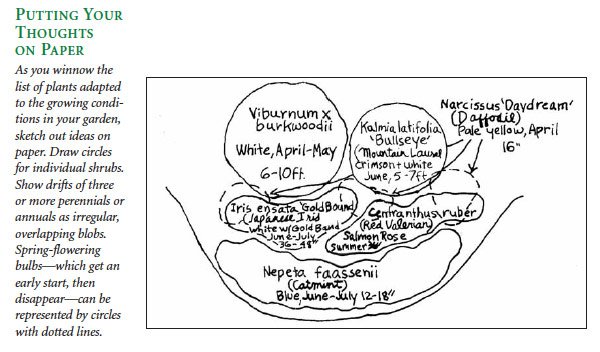
Start with shrubs (largest, hardest to move). Add perennials (including summer bulbs), then annuals. Spring bulbs last—mark with dotted lines.
Give favorites prominent placement with supporting cast. Space fills quickly.
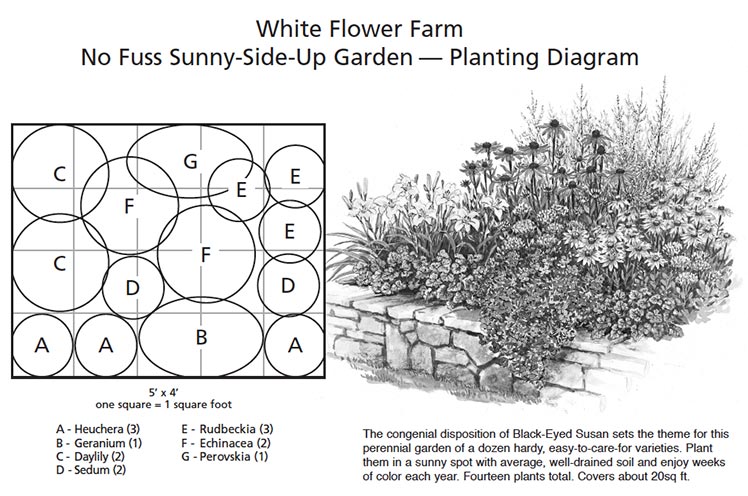
Use catalog/label spacing ranges (mature spread). Lower number = fuller; higher = open. Draw circles to scale on fresh tracing paper. Stagger in "W" pattern within drifts. Adjust design as circles reveal crowding/gaps.
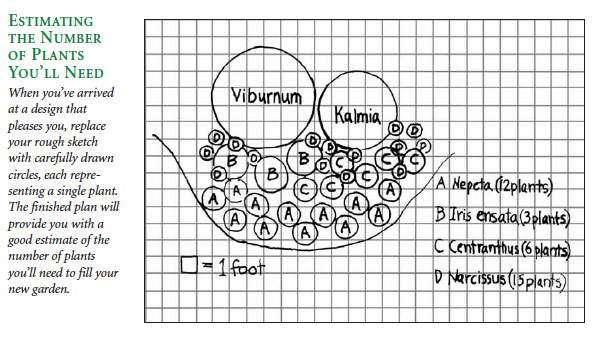
Expect to adjust at planting—order more or plug annuals if short; find extra spots if surplus.
Buy plants, prep soil (see "Caring for Your Plants"), plant. Garden is never finished—ever-changing process requiring regular intervention. That's the fun!
Long-Blooming Perennials: Achillea 'Moonshine', Aster 'Mönch', Boltonia 'Pink Beauty', Calamintha, Centranthus, Coreopsis, Corydalis, Dicentra, Echinacea, Heliopsis, Hemerocallis 'Happy Returns'/'Stella de Oro', Nepeta sibirica, Perovskia, Rudbeckia 'Goldsturm', Salvia 'Rose Wine'/'May Night', Scabiosa 'Butterfly Blue'/'Pink Mist', Stokesia, Veronica 'Goodness Grows'.
Shade Plants: Aruncus, Asarum, Astilbe, Convallaria, Corydalis, Dicentra, Ferns, Helleborus, Hosta, Lamium, Liriope, Mertensia, Polygonatum, Primula, Pulmonaria, Smilacina, Tiarella.
Plant Selection Chart: [See charts in original]

Starting a Garden with Flowers, Rock Bed, and Waterfall: Read Books First, Then Plan
Companion Plants for Moist, Sunny Gardens: Beyond Joe Pye Weed and Hibiscus
How to Use Garden Design Software Effectively
How to Design a Japanese Herb Garden: Research and Resources
How to Design Your Herb Garden: Site, Selection, and Soil Strategy
Design a Garden That Lasts: 5 Principles for a Resilient Landscape
Designing a Productive Vegetable Garden Layout
Designing a Perennial Garden: Patience, Planning, and Long-Term Beauty
Choosing the Right Garden Plants: A Strategic Approach to Design and Function
Garden Design Fundamentals: Site Analysis, Layout, and Plant Selection
Garden Design London: From Concept to Creation Across the Capital
Garden Design Essentials: Site Analysis, Layout & Plant Selection
Copyright © www.100flowers.win Botanic Garden All Rights Reserved