



Use each plant as both male and female parent. Choose parents with many common strengths and no shared weaknesses. If one parent has a weakness, choose the other with a balancing strength. Some varieties create poor offspring as the mother but good as the father, and vice versa.
Unless you live where the growing season is long, start during the first flush of flowers so the plant has the whole season to mature the seed.
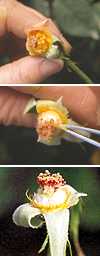
1. Choose six or more buds on the mother rosebush. They should be tightly closed.
2. Carefully remove petals and anthers from several mother buds. Use nail clippers. (Anthers are tiny stalks in the flower center; heads hold pollen. Anthers should not be shedding pollen yet.) A group of pistils remains. Cover clipped buds loosely with a paper envelope to keep out pollinating insects.
3. Let the prepared buds sit for one day. They're ready when stigmas (tops of pistils) become shiny and wet. Don't wait longer than two days.
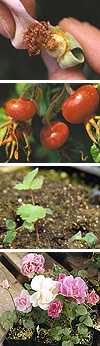
4. When prepared buds are ready, remove an opened bloom from the father plant (anthers open, shedding pollen). Snip off petals; leave anthers intact. Use this flower like a paintbrush to dab pollen onto all prepared mother flowers. Cover again with envelope. If successful, the mother flower base will swell into a rose hip within 1-2 weeks.
5. Leave the rose hips until they turn dark after a frost. Harvest and store in a sealed plastic bag in the refrigerator until spring.
6. In spring (a month or two before last frost), cut rose hips open and plant seeds in seed-starting mix or potting soil in a plug tray. Keep at 70-75°F in a greenhouse or southern window. Keep moist and fertilize regularly with diluted balanced fertilizer.
7. The seedlings should bloom within six weeks. Choose the ones to nurture (probably less than 5%), compost the rest. Pot survivors individually until ready for the garden. Over time, you'll discover other flaws (disease, lack of rebloom, weak plants). From several hundred seeds, you may keep only one plant—your unique creation.
Identifying and Treating Rose Slug Damage on Container-Grown Knock Out Roses
Rose of Sharon Winter Care: Not a True Rose, But Still Needs Protection
"Texas Rose" Houseplant: Not a Rose at All—Here's What It Likely Is
Tea Rose Indoors: Leggy Growth Means Insufficient Light
How to Water a Wandering Jew (Tradescantia)
Desert Rose (Adenium obesum): Sculptural Succulent with Showy Blooms
How to Plant Basil: Seeds or Transplants for Kitchen-Garden Freshness
Lenten Rose (Helleborus): Winter's Elegant Bloomer
Rose Propagation Methods: From Cuttings to Grafting – A Complete Comparison
Climbing Rose Bushes: Plant, Train, and Prune for Vertical Garden Drama
Common Rose Diseases: Identification, Prevention & Organic Treatment
How to Grow Roses: The Essential Beginner's Guide to Healthy, Blooming Plants
How to Plant a Tree for Long-Term Success
How to Plant Spring-Flowering Bulbs: Daffodils, Hyacinths, and Tulips
Copyright © www.100flowers.win Botanic Garden All Rights Reserved