


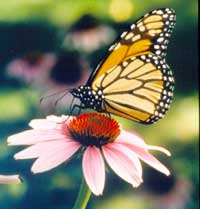
Echinacea, or purple coneflower, is a native plant that attracts butterflies.
In a world of red geraniums and yellow marigolds, wildflowers offer simple elegance. Beyond beauty, they’re tough, low‑maintenance, and once established, provide years of carefree blooms. Native plants support biodiversity—evolved alongside local insects, birds, and wildlife, they’re vital food and shelter sources.
Not all “wild” plants are native. Many escaped cultivation and naturalized (Queen Anne’s lace, purple loosestrife). Some are now considered weeds. Regional maps show native ranges, but don’t be a purist—many species adapt well outside their native zone. California poppy, for example, grows as a hardy annual far beyond its native Zone 8–10 range.
Walk your property and note:
Prairie/meadow species need half‑day+ full sun. Savanna/open woodland plants prefer part shade. Woodland plants thrive in part to full shade. Some woodland flowers (trillium, hepatica) bloom early before trees leaf out.
Even drought‑tolerant natives grow more vigorously in richer soil—you can use poorer soil to curb enthusiastic spreaders like black‑eyed Susan.
Regional nuance: a plant that loves full sun in the North may need part shade in hot‑summer areas.
Never dig from the wild. It’s often illegal (especially rare species), unethical, and wild plants rarely survive transplanting. Buy from reputable nurseries that propagate from seed. Mail‑order ships dormant plants in spring or fall. Some species prefer fall planting (birdsfoot violet, violet wood sorrel).
Collecting seed is fine if done judiciously. Commercial seed is widely available. Growing from seed is economical but slow; many natives need stratification (cold treatment). For most gardeners, buying plants is best—except for meadows, where mixed seed can be sown directly.
Some natives spread aggressively. Research via your state Extension Service or Natural Resources Department—a well‑behaved plant in one region can be a thug in another.
Don’t relegate wildflowers to “wild” areas. Many are well‑mannered and beautiful in formal beds. Match height, bloom time, color, and growth habit. A 4‑foot New England aster suits a hedgerow, not a clipped boxwood border.
Create a dedicated wildflower garden to learn habits before mixing. Rock gardens suit alpine and arid‑region natives (pasqueflower, poppy mallow). Many perennials (purple coneflower, foxglove, beardtongue, obedient plant) add height and cut‑flower appeal to borders.
Start a notebook with a wildflower guide. Note growing conditions and bloom times where you find them. Soon you’ll know dozens of natives and how to weave them into your landscape.
Native Prairie Wildflowers for a Sunny, Dry School Garden in New York
Carnivorous Plants Native to Oregon
Getting Started with Organic Gardening: A Beginner's Roadmap
The History of Plants and Gardens: From Cave Walls to Modern Horticulture
Landscaping with Native Grasses and Woody Plants: Low-Maintenance Beauty
Biochar for Gardens: Ancient Wisdom, Modern Soil Science
Creative Ways to Plant a Strawberry Jar: Herbs, Flowers & More
Getting Started with Indoor Gardening: Year-Round Growing Guide
Cultivating a Thriving Garden: From Soil Preparation to Plant Selection
Native Plants & Natural Pest Control: A Pacific Northwest Guide
Indoor Gardening: Grow Fresh, Beautiful Plants Year-Round
Choosing the Right Gardening Plants for Year-Round Beauty and Utility
Planning Your Garden: Soil Prep, Plant Selection, and Design
Copyright © www.100flowers.win Botanic Garden All Rights Reserved