


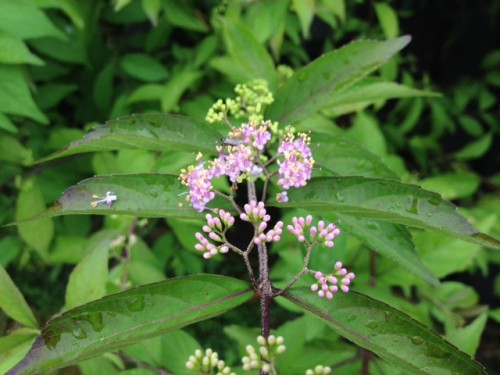
Callicarpa lives up to its common name, beautyberry. Small pink flowers cluster along long, arching branches in summer, replaced by glossy purple berries in fall and winter. These berries feed birds like bobwhites, towhees, and cardinals, often persisting until other food sources are depleted.
Slow-growing to about five feet high and wide with a rounded form, Callicarpa is native to the U.S., hardy in zones 5–8, tolerant of part shade, and thrives in moist soil.
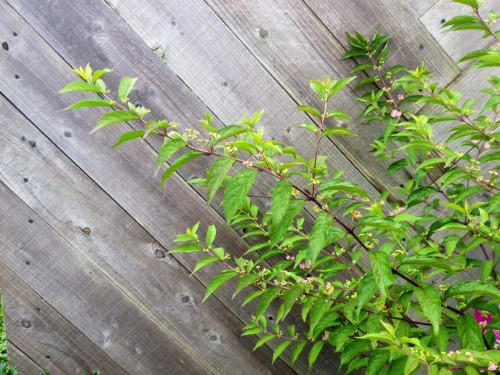
Urban Roots stocks 'Early Amethyst', which sets fruit in early September. Currently, both flower clusters and young green berries are present—we can't wait to see them ripen to bright purple.
The fruits are edible but very astringent, so eat sparingly. Crushed leaves are a folk remedy for repelling mosquitoes; farmers once placed cut branches with crushed leaves under horse harnesses to deter flies and mosquitoes. In the early 2000s, USDA researchers isolated four mosquito-repelling chemicals from the plant.
Classroom Carnivorous Plants: Terrarium Is Wrong, Use Proper Pots
Carnivorous Plants for Egypt's Hot, Dry Climate: Nepenthes, Drosophyllum, Woolly Sundews
Carnivorous Plant Care: Venus Flytrap, Pitcher Plant & Sundew
Woody Perennials for Spectacular Fall Landscaping in the Midwest
8 Fragrant Plants for a Delicious Fall Garden: Caramel, Vanilla, Clove, and Honey Scents
8 Pickable Plants for Stunning Fall Centerpieces
Rooting Passalong Plants in Fall: Water, Soil Layering & Kitchen Window Methods
Caring for Established Blue Euphorbia: Watering Timing Matters
Termite Tenting (Vikane) and Houseplants
How to Save a Corn Plant (Dracaena) with Brown Leaf Tips
Partnering with Expert Horticulturists for Garden Transformation
Creative Ideas for Fall Container Gardens
Raspberries in Pots for Fall Planting: Establishment Guide for Potted Canes
6 Winter Berry Plants That Keep Birds Fed and Gardens Beautiful
Copyright © www.100flowers.win Botanic Garden All Rights Reserved