


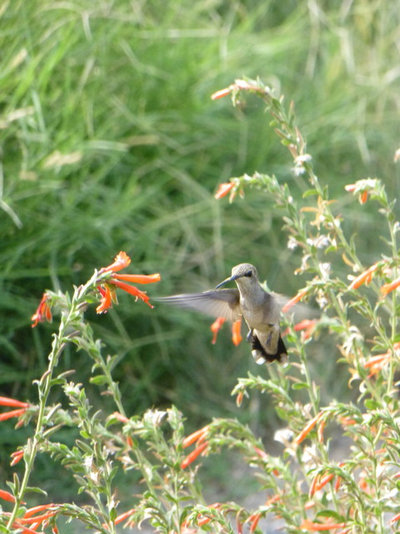
Until recently, I only knew California fuchsia (Zauschneria californica) as patches of red blazing through granite cracks at 7,000 feet near Echo Summit. Today, it’s widely available at nurseries—even big-box stores—thanks to wholesalers like Monrovia. The plant has been tamed, losing its scraggly wild look but keeping its brilliant color and toughness. It’s a dependable, long-blooming summer perennial for dry, sunny spots, especially slopes. Hummingbirds adore it, and the plant relies on them for pollination.
Waterwise Landscapes Incorporated
California fuchsia is a low-growing, sun-loving native perennial. Its name comes from the tubular, mostly orange or red flowers shaped like common fuchsia—but unlike its namesake, it thrives in heat and sun, not cool shade.

Tubular flowers bloom in bright orange or red. Leaves are small and grayish. Numerous varieties exist; newer ones are especially long-blooming. 'Bert's Bluff' is orange-red. 'Ghostly Red' has the purest red flowers and fuzzy gray-green leaves. Others include 'UC Hybrid' (developed at UC Davis) and 'Calistoga' (orange-red).
Plant in fall or early spring so roots establish before heat. Ensure quick drainage. Water regularly (every week or two) during the first growing season. Once established, cut back to watering only as needed. Prune established plants nearly to the ground in fall after bloom. Lightly tip-prune in spring to encourage bushy growth.

Monrovia
For late-summer and early-fall color when other plants fade, combine California fuchsia (shown here is 'Ghostly Red') with mass plantings of other natives and Mediterranean plants. Line a path with it. Let it spill over a rock wall or boulders.
Texas Ranger: The Desert Shrub That Blooms on Humidity's Cue
Wild Geranium (Geranium maculatum): Reliable Color for Shade Gardens
Great Design Plant: Little Heath Andromeda for Four-Season Color
'Thunder and Lightning' Field Scabious: Foliage and Flowers for Midsummer Magic
Lungwort: The Shade Garden Star With Silver-Spotted Foliage
Dudleya: California's Dramatic Liveforever Succulent
Great Design Plant: Roger's California Grape for Spectacular Fall Color
Little Bluestem (Schizachyrium scoparium): Four-Season Native Grass for Beauty and Wildlife
Beavertail Prickly Pear (Opuntia basilaris): Desert Jewel with Magenta Blooms
Desert Ruellia (Ruellia peninsularis): Tough Beauty for Dry Gardens
Pink Trumpet Vine (Podranea ricasoliana): Vibrant Color for Hot Climates
Autumn Fern: Year-Round Color Despite the Name
Blanket Flower: A Cheerful, Tough Native for Year-Round Color
Great Design Plant: Periwinkle (Vinca Minor) for Shade Ground Cover
Copyright © www.100flowers.win Botanic Garden All Rights Reserved