


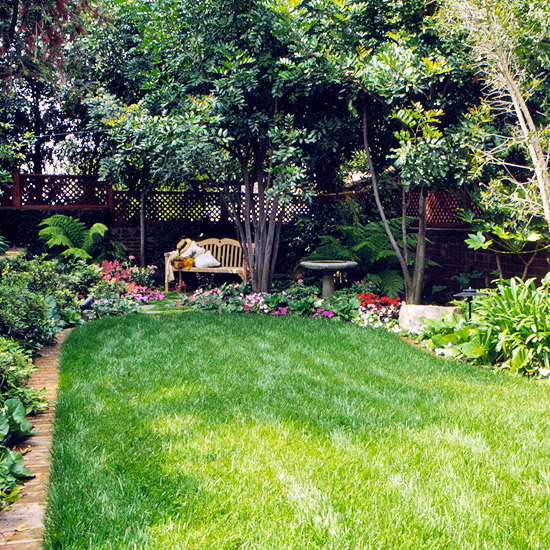
Stop summer weeds: Apply pre-emergent herbicide mid-February to early March.
Begin mowing: Start mid- to late spring as growth begins.
Remove thatch: Thatch (dead grass layer) blocks air, water, nutrients. Remove before summer growth.
Fertilize: Warm-season lawns hunger in heat. Feed late April/early May per package instructions through summer.
Grub control: Long-acting killer in early to late May if grubs are problematic.
New lawn: Seed, sprigs, or plugs in summer. Warm-season grasses need constant moisture during establishment.
Mowing: Regular in summer. Never remove >1/3 blade length — stresses lawn.
Aerate: Summer for hard, compacted soil — improves air, moisture, nutrient access.
Water: ~1 inch weekly average.
Overseed with annual ryegrass: Bermudagrass browns in winter; ryegrass stays green in cool months, dies when heat returns as Bermudagrass greens up.
Prevent winter weeds: Pre-emergent mid-October to mid-November.
Final mowing: Continue as growth slows. Don't let it get too long entering dormancy.
Debunking the Sugar Myth for Weed and Ant Control
Maples and Grass in Southern Alabama: Choose Wisely
Rotary Mower Buying Guide: Walk-Behind, Self-Propelled, and Riding Options
Summer Lawn Care Made Simple: Water, Feed, Mow, Maintain
Fall Lawn Care: The Secret to a Lush Spring Lawn
Beginner's Guide to Reviving a Tired Lawn
The Case for Losing the Traditional Lawn: Ecological Alternatives
Best Riding Mowers for Small Yards: Top 3 Picks for Maneuverability and Value
Best Riding Mowers for Hills: Top Picks for Sloped Yards
Choosing the Best Underground Lawn Irrigation System for Your Property
Choosing and Testing a Portable Lawn Sprinkler
Buying Guide: How to Pick the Best Riding Mower for Your Yard
How to Get the Perfect Lawn for Your Garden
Small-Space Shade Garden Plan for the South: 5x7 Feet of Cool Beauty
Copyright © www.100flowers.win Botanic Garden All Rights Reserved