


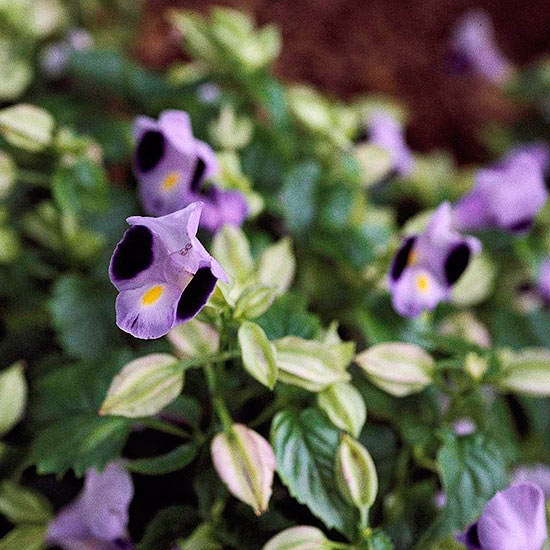
Torenia, a shade-loving annual, is nicknamed the wishbone flower. Look inside its purple, blue, or burgundy petals to find tiny wishbone-shaped stamens. Learn more about wishbone flower.
The coast redwood (Sequoia sempervirens) is the world’s tallest-growing tree, thriving along the Pacific Coast, mainly in California. Surprisingly, it’s not the oldest—that title belongs to the bristlecone pine (Pinus aristata). Try a fun seed-ball planting technique.
Bamboo is the fastest-growing woody plant, capable of shooting up 35 inches in a single day. Learn more about bamboo plants.
Tomato juice is Ohio’s official state beverage, honoring A. W. Livingston of Reynoldsburg, who popularized the tomato in the late 1800s. Recipe: homemade tomato juice.
Archaeologists found evidence of grape cultivation for wine in Mesopotamia (modern Iraq) about 8,000 years ago. Ancient Egyptians first recorded the winemaking process around 5,000 years ago. Grow your own grapes.
In 1600s Holland, tulip bulbs were worth more than gold. The speculative frenzy, called “tulip mania,” crashed the Dutch economy. Cut tulips can continue growing an inch per day.
Vanilla flavoring comes from the pod of the orchid Vanilla planifolia. Though called vanilla beans, they’re more closely related to corn than green beans.
European explorers named the pineapple for its pinecone-like appearance and apple-like flesh. Pineapples are the only edible members of the bromeliad family. Get tips for grilling pineapple.
Botanically, avocados and pumpkins are fruits because they bear seeds. Rhubarb, however, is a vegetable.
Saffron, a prized Mediterranean spice, is harvested from the stigmas of the fall-blooming crocus Crocus sativus.
Poinsettias, native to Mexico, were introduced to the U.S. in 1825 by Joel Poinsett, the first U.S. minister to Mexico, after whom the plant is named.
Small air pockets inside cranberries make them bounce and float in water.
The titan arum (Amorphophallus titanium) produces the largest unbranched flower, reaching 15 feet tall. Its rotting-meat scent attracts fly pollinators. Rafflesia, from Sumatran rainforests, uses a similar strategy.
All parts of the oleander (Nerium oleander), a Mediterranean flowering shrub, are poisonous. Ingestion can cause severe gastrointestinal, cardiac, and nervous system issues, even death. Learn more about oleander.
Iris means “rainbow” in Greek; Iris was the rainbow goddess. Artemisia (wormwood) honors Artemis; Asclepias (milkweed) honors Asclepius; Hebe honors the goddess Hebe.
In France, May 1 is La Fête du Muguet, a festival where bouquets of lily-of-the-valley are given for health and happiness. Learn more about lily-of-the-valley.
Angiosperms are flowering plants with seeds in capsules or fruits. Non-flowering plants (pines, spruces, firs, junipers, larches, cycads, ginkgoes) are gymnosperms.
Snapdragon flowers resemble a dragon; squeezing the sides makes the “mouth” open and close. Learn more about snapdragons.
A sunflower head comprises hundreds of tiny florets that ripen into seeds. This holds true for all sunflower-family plants: daisies, yarrow, goldenrod, asters, coreopsis, and bachelor’s buttons.
The first potatoes were cultivated in Peru about 7,000 years ago. Learn more about potatoes.
Peaches, pears, apricots, quinces, strawberries, and apples belong to the rose family, along with ornamental species like spirea, mountain ash, goatsbeard, and ninebark.
Cranberries, Concord grapes, and blueberries are three popular fruits native to North America.
The only difference is that nectarines lack fuzzy skins. You can graft peach branches onto a nectarine tree (or vice versa) to grow both fruits. Learn more about peaches and nectarines.
The average strawberry has 200 seeds and is the only fruit that bears its seeds on the outside. Learn more about strawberries.
Sulfuric compounds cause the tears when cutting onions. Chilling the onion and cutting the root end last reduces the effect, per the National Onion Association.
Garlic mustard is a mustard-family member, not garlic. This invasive herb threatens native plants in the Eastern and Midwestern U.S.
Ginkgo (Ginkgo biloba) dates back 250 million years; dawn redwood (Metasequoia glyptostroboides) about 150 million years. Both were known from fossils before living specimens were discovered. Learn more about ginkgo | Learn more about dawn redwood.
Trees are the longest-living organisms on Earth.
Peanuts are legumes related to beans and lentils, not nuts. They contain more protein, niacin, folate, and phytosterols than any nut, according to the National Peanut Board. Learn more about peanuts.
The title of world’s hottest chili pepper is contested. ‘Bhut Jolokia’ held the Guinness record in 2007 (401.5 times hotter than bottled hot sauce), but several hotter chilis have since claimed the title.
Plant Nutrient Guide: Primary & Micronutrients, Timing & Application
Growing Fruit Trees: Varieties, Siting, and Care for Decades of Harvests
Bermuda Grass: The Resilient Turf for Southern Lawns
Amazing Ant Facts: 10 Reasons These Tiny Insects Are Nature's Superstars
Understanding Hydroponics: Soil-Free Growing for Health and Efficiency
Designing with Russian Sage for Maximum Impact
Determining Cold Hardiness for Drosera and Sarracenia in the Pacific Northwest
Light Spectrum for Highland vs. Lowland Nepenthes: Atmospheric Filtering Theory
Bayer Systemic Working on Aphids—Use Sparingly
Gardening Gear Essentials: Gloves, Tools, and Greenhouse Wisdom
Essential Tips for Growing Chrysanthemums (Mums)
Hummingbird and Butterfly Plants: Nectar-Rich Perennials and Shrubs for Western Gardens
Copyright © www.100flowers.win Botanic Garden All Rights Reserved