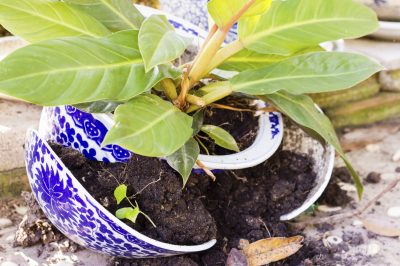
A cracked pot isn't trash—it's a design opportunity. Broken terra cotta, ceramic, and concrete containers become fairy gardens, succulent displays, layered landscapes, and drainage solutions. Here's how to transform broken pottery into garden art.
Why Broken Pots Work
- Shallow, irregular soil pockets = perfect for shallow-rooted plants (succulents, sedums, mosses).
- Built-in drainage (cracks/holes) prevents overwatering.
- Rustic, aged aesthetic fits cottage, Mediterranean, fairy garden styles.
- Free material—you already own it.
Design Concepts for Broken Pot Gardens
1. Single Pot, Missing Section → Succulent Bowl
Large chip out of rim? Fill remaining basin with gritty succulent mix. Plant echeveria, sedum, sempervivum, haworthia. Top with gravel. The broken edge becomes a feature.
2. Shards as Retaining Walls → Terraced Layers
Sink large shards vertically into soil inside a larger broken pot (or intact wide bowl). Create stepped levels. Plant cascading varieties (string of pearls, creeping thyme) on upper tiers; upright succulents below.
3. Staircase & Pathway Details
Small shards become "stairs" between soil levels. Flat pieces = stepping stones. Arrange to guide the eye through the composition.
4. Multi-Pot Nested Scenes
Large pot with cracked side → window into smaller intact pots inside. Each inner pot = distinct micro-garden (herbs, succulents, moss). Creates depth and surprise.
5. Mosaic Mulch & Edging
Crush pottery to 1–2 inch fragments. Use as:
- Inorganic mulch (doesn't decompose, reflects heat).
- Path edging.
- Drainage layer in other pots.
- Decorative top-dress for containers.
Best Plants for Broken Pot Gardens
| Category | Plants | Why |
|---|
| Succulents | Echeveria, Sedum, Sempervivum, Graptopetalum, Crassula | Shallow roots, drought-tolerant, colorful forms |
| Alpines & Creepers | Thyme, Sedum acre, Aubrieta, Dianthus, Lewisia | Tight mats, love gritty drainage |
| Mosses | Sheet moss, cushion moss, mood moss | Thrive in damp, shaded shards |
| Mini Herbs | Corsican mint, dwarf oregano, creeping rosemary | Fragrant, tolerant of shallow soil |
| Air Plants | Tillandsia spp. | No soil needed; glue/wire to shards |
Construction Tips
- Safety first: Wear gloves, goggles. Edges are razor-sharp. File/sand contact points.
- Drainage: Ensure cracks/holes allow water exit. Drill ¼" holes if needed.
- Soil mix: 1:1:1 potting soil : coarse sand/perlite : pumice/grit. Fast drainage essential.
- Stability: Bury shards 2–3 inches deep. Use landscape adhesive for vertical pieces.
- Sealant (optional): Clear masonry sealer on terra cotta reduces moisture wicking.
Fairy Garden Integration
Broken pots are the ideal fairy garden vessel. The irregular levels create natural "rooms." Add miniature doors, benches, bridges between shards. Kids love co-creating these.
Where to Find More Broken Pots
- Thrift stores (cracked items often discounted/free).
- Garden center "damaged" pile (ask manager).
- Construction sites (broken pavers, tiles).
- Neighbors' curb piles.
Broken pottery tells a story. Instead of hiding the cracks, highlight them. Your garden gains character, your waste stream shrinks, and succulents get the perfect home.
Copyright © www.100flowers.win Botanic Garden All Rights Reserved


