


Mountain laurel (Kalmia latifolia) has always been more than a plant to me—it's a thread connecting generations, a symbol of my Appalachian childhood, and a bloom that refuses to grow in my western Kentucky flatlands, no matter how I try.
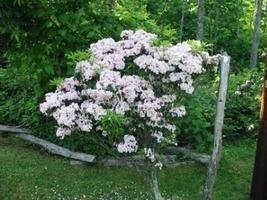
My grandfather's house sat on a wooded hillside in the Appalachian foothills. Early summer draped the slopes in pinkish-white laurel blossoms. My Aunt Ruby—sixteen, beautiful, piano-playing, and princess-like to my child's eyes—took me walking there. She called mountain laurel "a flower of love," and I believed her completely.
Native to eastern North America, this evergreen relative of rhododendron blooms May–June, hardy to Zone 4. It grows in rich, rocky woods under deciduous trees, pollinated by bees. My grandfather kept hives on the hill; we ate honey at every meal. The plant is toxic—leaves poisonous to livestock—and folklore warns that honey from laurel nectar may carry toxins, though we never suffered.

My great-aunt, a traditional healer, shared Native American lore: laurel as a "death potion" for heartbroken maidens, with whiskey as the only antidote (which terrified me). She also knew gentler uses: leaf infusion as disinfectant wash for pain, cuts, rheumatism, parasites; internally for neuralgia, tinnitus, ear issues. The soft fresh root carved into spoons that hardened on drying; wood used for tools and fuel.
One laurel-season picnic under a chestnut tree ended in chaos when a bee landed on my hand. Aunt Ruby swept me under her vast gathered skirt, and we careered down the hillside—a zigzagging, four-legged monster of petticoat and screams. The bee, Aunt Ruby, and I were equally terrified. I emerged unscathed but clinging to her petticoat, to the horror of my mother and grandparents. Aunt Ruby may have retired from babysitting that day.


Today Aunt Ruby still lives on that hillside. When I visit, we walk the laurel paths and laugh at the Bee and the Petticoat. All my mountain memories are rooted in plants—and the people who taught me to see them.
Photos from DG PlantFiles: Sarahskeeper, woodspirit1, claypa, imanerd. Final photo: author's family archive.
Large Hairy Spider in Poplar Tree: Likely Wolf Spider
Big Green Caterpillar on Colonial Parkway: Luna Moth or Sphinx?
Wheelbarrow Design Ideas from a Landscaper's Perspective
The Rich History of Bonsai: From Chinese Origins to Global Art
Mountain Laurel (Kalmia latifolia) Care Guide
Texas Mountain Laurel (Calia secundiflora)
Mountain Garden Checklist: Summer Planting and Pest Management
Hand-Pollinating Vanilla Orchids: Step-by-Step Guide
Black Spot on Knockout Roses: Does Dyed Mulch Harm Plants?
Stabilizing a Newly Planted, Shaky Dogwood
Mystery Nepenthes from Open House: Likely maxima Hybrid, Parentage Unknown
Personal Reconnection: Armco Steel Memories and Herb Journey
Copyright © www.100flowers.win Botanic Garden All Rights Reserved