


Rain gardens offer a stunning way to manage stormwater runoff while enhancing your landscape's visual appeal. By capturing water from downspouts, slopes, or paved areas, these shallow depressions allow moisture to percolate naturally into the soil—reducing erosion, filtering pollutants, and recharging groundwater.
Turn your rain garden into a living mosaic by dividing the basin into interlocking "puzzle pieces." Each section can feature distinct soil amendments—dark compost in one, sandy mix in another—and host different plant communities. Imagine a flowering shrub thriving in rich loam beside a drought-tolerant succulent in gritty sand. Even before plants mature, the contrasting soil colors create artistic interest.
For a simpler yet elegant approach, outline a graceful kidney-shaped depression. Plant tall native grasses like switchgrass or little bluestem as a backdrop, then dot the foreground with upright flowering perennials such as coneflowers, black-eyed Susans, or blazing star. The vertical layers create movement and attract pollinators, while the curved shape softens the landscape.
Frame your rain garden with smooth white pebbles or decorative gravel for a clean, modern edge. In the center, install a self-circulating fountain or a large glazed ceramic pot resembling a cauldron. Surround it with a single species of flowering shrub—like dwarf fothergilla or summersweet—or a neat ring of lawn grass. The water feature adds soothing sound and a cool microclimate, while the pebble border defines the space beautifully.
With thoughtful design, your rain garden becomes a resilient, low-maintenance highlight that conserves water and supports local ecology—all while looking spectacular year-round.
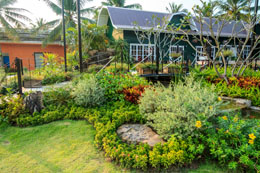
Build a Rain Garden: Eco-Friendly Stormwater Solution
Garden Shed Designs: Where Beauty Meets Function
Aquascape Design: From Minimalist to Lush, Your Vision Rules
Small Garden Design Ideas: Maximizing Limited Space in Knutsford
Designing Stunning Perennial Flower Beds: A Step-by-Step Guide
Gardening Through the Golden Years: Adapting Your Passion for Lifelong Enjoyment
How to Build a Rain Garden: Step-by-Step Guide for Homeowners
Gardening for Beginners: Vegetable, Flower, and Organic Basics
Rain Garden Plants: Best Species for Wet Sites
Georgian Walled Garden Design: Formal Elegance
Wheelchair-Accessible Garden Design: Beauty and Function
Front Garden Designs: Curb Appeal with Low Maintenance
Beginner Garden for Shade: Low-Maintenance Three-Season Beauty
Designing a Rain Garden: Turn Wet Spots into Beautiful Features
Copyright © www.100flowers.win Botanic Garden All Rights Reserved