


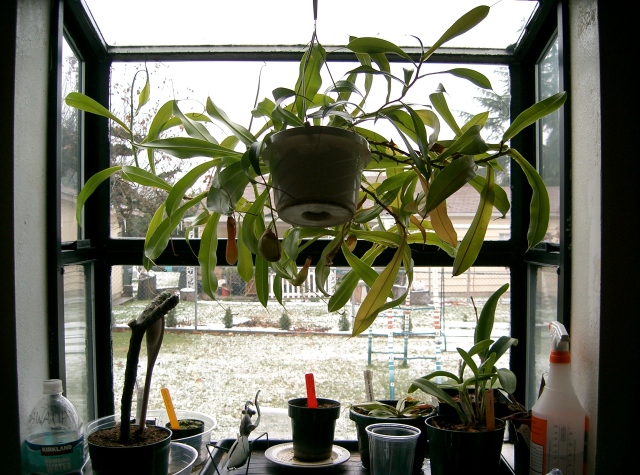
Using a humidifier to raise humidity for lowland Nepenthes (like N. bicalcarata) in a south-facing garden window seems logical, but temperature is actually the critical factor.
Lowland species require consistently warm temperatures: daytime highs in the 80s–90s°F (27–32°C) and nighttime lows no lower than 70°F (21°C). In our greenhouse, N. bicalcarata died during winter despite high humidity because temperatures dropped into the 50s and 60s°F. If you can provide the necessary warmth first, then supplemental humidity (via an ultrasonic humidifier) will help.
For maintaining root-zone warmth, horticultural heat mats or bench heaters (like those used for reptile terrariums) can be effective. Use only units designed for plants and follow manufacturer instructions to avoid overheating roots.
Good Growing!
Jeff Dallas
Sarracenia Northwest
www.cobraplant.com
Windowsill Nepenthes and Heliamphora: Species Selection for Lowland Conditions
Why Nepenthes Stop Pitchering After a Move and How to Fix It
Smallest Lowland Nepenthes for Terrarium Growing
Nepenthes Pitcher Failure: Humidity vs. Light, and Flowering Expectations
Lowland Nepenthes Care: Bicalcarata and Ampullaria in Windowsills
Lowland Nepenthes Seed Germination: Heat Mats, Viability, and Plastic Covers
Nepenthes Classification: Highland, Lowland, Intermediate Explained
Growing Nepenthes on a Windowsill: Species Selection, Light, and Humidity Adaptation
Growing Nepenthes truncata Outdoors in San Diego
Overwintering Lowland Nepenthes in Houston: Indoor Humidity Solutions
Why a New Nepenthes Ventricosa Pitcher Lid Opens and Closes
Choosing a Compact Nepenthes for a Terrarium Near a Window
Growing Nepenthes ephippiata at Home: Challenges and Better Alternatives
Growing Nepenthes hamata on a Windowsill: Acclimation Protocol
Copyright © www.100flowers.win Botanic Garden All Rights Reserved