


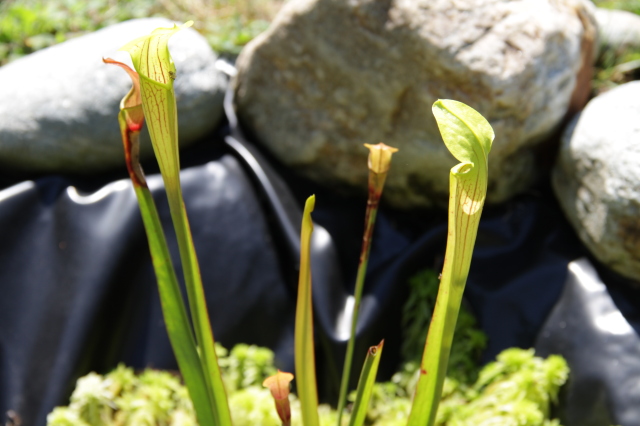
Sarracenia alata
S. alata is a southern species adapted to a long growing season and hot summers. In cooler climates (like Oregon), it often looks rough early in the season, then peaks in late August–September with its best pitchers of the year.
Be patient. Trim off unsightly early pitchers if you wish—it won't harm the plant. Focus on providing full sun, constant moisture, and pure water. The show gets better as summer progresses.
Small red spots on pitchers are usually harmless—either natural pigmentation from age/light or minor mold on nectar. Not a concern unless the plant declines overall.
Cephalotus Not Growing? It May Need Feeding
Sarracenia alata Seasonal Pitcher Development
Nepenthes Pitchers Form Away from the Light Source
Rare Mutation: Two Pitchers on One Nepenthes Leaf
Sarracenia minor Decline in Santa Cruz: Mineral Buildup and Light Deficiency
Can Drosera spatulata Seeds Germinate in Water? Short-Term Only
Why Sarracenia flava Produces Smaller Pitchers Later in Season
Staking Top‑Heavy Sarracenia Pitchers
Basal Shoots on Nepenthes: Normal Vining Behavior
Identifying a Vigorous Nepenthes: Likely N. sanguinea Hybrid
Falling Sarracenia leucophylla Pitchers: Light Deficiency
Building a Long-Lasting Wooden Gazebo: Climate, Soil, Finish, and Assembly Essentials
Commercial Roofing Systems: Materials, Efficiency & Contractor Selection
Copyright © www.100flowers.win Botanic Garden All Rights Reserved