


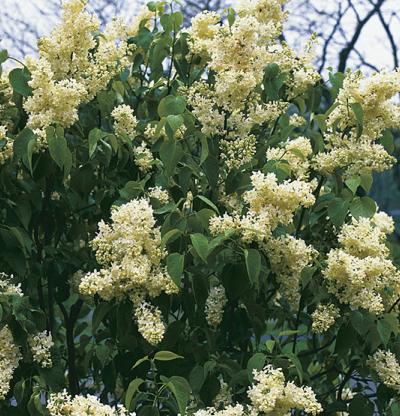
Common Lilac 'Primrose' (Syringa vulgaris 'Primrose') bears unique slightly fragrant, creamy yellowish blossoms in midseason. Forms a shrub 12 feet high by 8 feet wide. Lilac flowers are beloved for bouquets; hummingbirds and butterflies visit. Generally forgiving, tolerant of roadside sites and neglect.
Reasonably fertile, well-drained soil in full sun; prefers neutral to slightly alkaline soil. Deadhead promptly. Prune lightly or renovate in late winter or early spring. Good air circulation. Fire retardant. Requires chilling dormancy. Propagate by softwood cuttings or layer in early summer, graft in winter, bud in summer. Watch for powdery mildew, dieback, leafroll virus, MLO, root knot nematode, Verticillium wilt, witches' broom, bacterial leaf spot, anthracnose, borers, scale, caterpillars.
Reviving a Non-Blooming Lilac with Powdery Mildew and Scale
Evening Primrose vs. Moonflower vs. Datura: Which Seeds Do You Have?
Calluna vulgaris 'Spring Torch': Colorful Heather for Year-Round Interest
Pulsatilla vulgaris: Pasque Flower
Syringa 'Bailina': Thumbelina Lilac, a Dwarf Fragrant Pink Bloomer
Syringa × laciniata: Cut-Leaf Lilac with Fine-Textured Foliage and Pale Lilac Blooms
Primula (Primrose): Diverse Species for Shade, Bogs, & Rock Gardens
Pinguicula primuliflora Flowering and Seed Production
Menopausal Hot Flashes & Sleep: Blessed Thistle & Passion Flower Support
Identifying Hooker's Evening Primrose (Oenothera elata)
Organic Pest Control for Calabash Gourd (Lagenaria) Flower Pests
Cape Primrose (Streptocarpus): Care Guide for Months of Colorful Blooms
Syringa × chinensis 'Lilac Sunday': Chinese Lilac with Nodding Light-Purple Clusters
Syringa × prestoniae 'Miss Canada': Preston Lilac with Rose-Pink Late Blooms
Copyright © www.100flowers.win Botanic Garden All Rights Reserved