


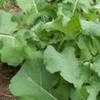
Brassica napus var. oleifera, commonly known as Oilseed Rape, Rapeseed, or Canola (specifically low-erucic acid cultivars), is a bright yellow-flowering annual or biennial herb widely cultivated for its oil-rich seeds. It forms a rosette of large, lobed, blue-green leaves, from which rises a tall, branching stem (3-5 ft) bearing numerous four-petaled, cross-shaped yellow flowers. The flowers are followed by long, narrow seed pods (siliques) containing small, round, black seeds.
| Family: | Brassicaceae (brass-ih-KAY-see-ee) |
| Genus: | Brassica (BRAS-ee-ka) |
| Species: | napus var. oleifera |
Rape is a cool-season crop grown globally for vegetable oil, animal feed (meal), and biodiesel. It requires fertile, well-drained soil and adequate moisture. It is also used as a cover crop and green manure due to its deep taproot and biomass production. The vast yellow fields in bloom are a familiar sight in agricultural landscapes. It can escape cultivation and naturalize in disturbed areas.
Comfortroot (Hibiscus aculeatus)
Hibiscus hamabo: Coastal Species
Mandrinette – Hibiscus boryanus
Furcraea macdougalii: A Giant, Trunk-Forming Relative of Agave
Euphorbia bupleurifolia: A Bizarre, Pineapple-Topped Succulent with a Caudex
Candelilla (Euphorbia antisyphilitica): A Leafless, Wax-Producing Shrub for Extreme Heat
Copyright © www.100flowers.win Botanic Garden All Rights Reserved