


Botanical Name: Fatsia japonica
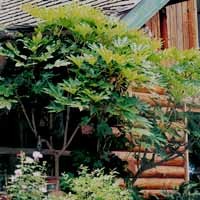
Japanese Aralia brings a tropical, architectural presence to indoor spaces with its large, glossy, deeply lobed leaves. A member of the Araliaceae family, it's commonly grown outdoors in frost-free climates but adapts well to container life indoors, where regular pruning keeps it manageable.
Long, upright leaf stems support leaves with 7–9 pointed lobes, each reaching up to 12 inches (30 cm) across. The foliage is a rich, glossy green that adds instant drama.
Mature plants may produce clusters of creamy-white flowers in fall, followed by green fruit that ripens to black—though flowering is rare indoors.
This fast-growing evergreen shrub responds well to hard pruning. Cut it back by up to half in spring, and pinch off growing tips to encourage a bushier, more compact form.
Repot in spring when root-bound. Use a heavy container to prevent toppling, as plants become top-heavy with age. For large specimens, top-dress annually by replacing the top 2–3 inches (5–7.5 cm) of soil with fresh mix. Ensure the pot has drainage holes to avoid soggy conditions that cause root rot.
Check leaves regularly for spider mites, aphids, and mealybugs. Treat any infestation immediately. If moved outdoors in summer, place in full shade—direct sun burns the leaves. The cool, moist conditions F. japonica prefers can invite botrytis; remove affected leaves and improve air circulation.
This plant needs a cool rest period in winter. Move it to a spot where temperatures stay above 45°F (7°C) and reduce watering frequency.
False Aralia (Dizygotheca) Care: Lacy Foliage for Warm, Humid Spots
Japanese Holly Fern (Cyrtomium) Care: Tough, Glossy, Non-Shedding
Ming Aralia (Polyscias fruticosa): Feathery Foliage That's Tougher Than It Looks
Oriental Poppy: Spectacular Early Summer Blooms for Cool Climates
Spirea: Cascading Spring & Summer Flowers on Easy-Care Shrubs
Growing Strawberries: The Sweetest Berry Fresh from Your Garden
Deciduous Magnolia Dormancy: Velvet Buds and Leaf Drop Explained
Clematis Pruning Guide: When and How to Cut Back Your Vine
Spring-Fed Wet Spot on Slope: Call Excavation Pro for Drain/Sump
Elephant's Ear (Alocasia) Care: Exotic Foliage for Warm, Humid Spots
Orchid Cactus (Epiphyllum): Complete Care & Blooming Guide
Ornamental Onions (Allium): Architectural Globes for Spring to Fall
Japanese Aralia (Fatsia japonica): Growing the Bold Tropical Shrub
Copyright © www.100flowers.win Botanic Garden All Rights Reserved